
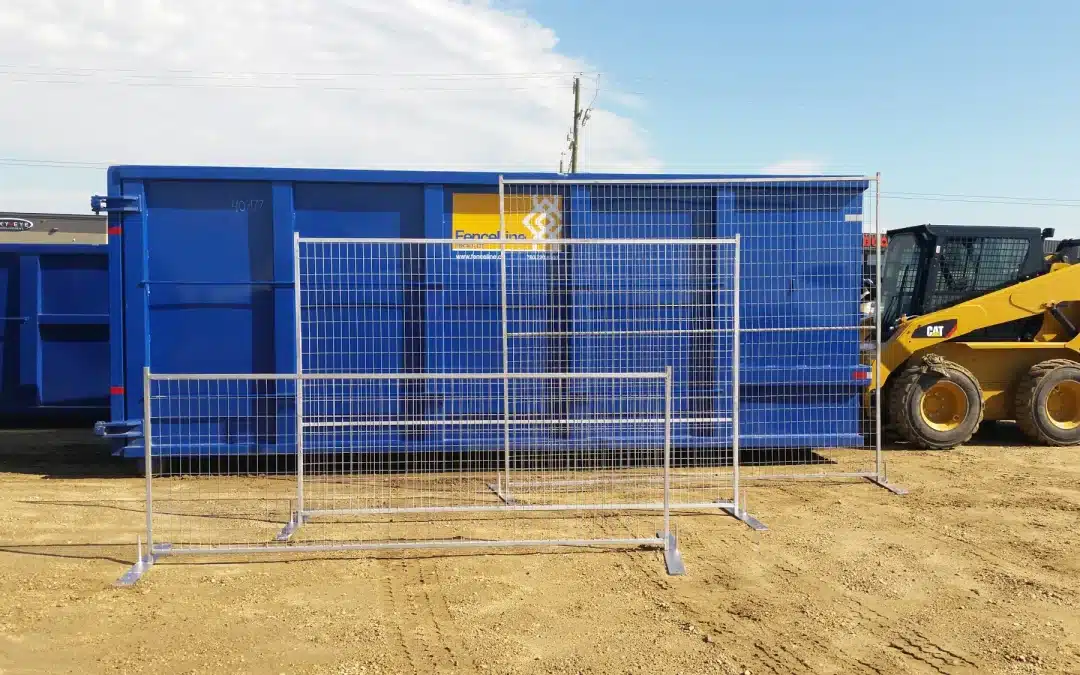
Before work starts on a construction site in Calgary or Edmonton, you need a plan for construction fencing: what Alberta’s building code requires, what equipment your site needs, how much fencing to order and when to book it. This guide walks through each step. FenceLine offers construction fence rentals in Calgary, Edmonton and across Alberta, and our team handles delivery, setup, and take-down.
Key Sections
- Construction fencing keeps the public away from site hazards, secures your equipment and materials, and meets Alberta’s building code requirements
- A construction fence setup needs three things: fence panels, hardware such as couplers, clamps and bases to keep them secure, and gates for safe site access.
- Alberta’s building code requires a fence at least 1.8 metres high around construction or demolition sites 2 metres or more from a public way, with a lockable gate wherever workers or vehicles need access.
- Alberta’s weather is tough on temporary fencing, so look for hot-dip galvanized panels with welded wire mesh and square tube frames that stand up to Chinook winds, snow, ice and road salt.
- To estimate how much fencing you need, divide your site’s perimeter by 10 feet, the width of a FenceLine panel.
What Do I Need to Set Up Construction Fencing in Calgary & Edmonton?
Construction Fence Panels
FenceLine offers four grades of temporary fence panels, so you can match your fencing to your site:
- Standard: Best for residential builds, renovations and short-term projects with lighter security needs.
- Commercial: Suited to commercial construction and downtown sites with steady foot traffic nearby.
- Heavy Duty: Built for larger commercial and industrial sites, or any location exposed to strong winds.
- Super Heavy Duty: Designed for industrial sites, long-term projects and high-security locations where maximum strength and stability matter most.
What’s included: Panel sets include a base and a coupler, a 2.0 mm wall tube, and a 3.0 mm wire with a hot-dip galvanized middle bar.
Fence Hardware
Fence hardware connects your fence panels and ensures they stay secure and upright. We offer both new and used hardware for sale, including:
- Couplers: You’ll need a minimum of 2 couplers per panel.
- Security Clamps: We recommend a minimum of 2 clamps per panel.
- Super Clamps: Minimum of 2 clamps per panel.
- Bases: 2 bases per fence panel.
- Caster Wheels: 1 wheel per gate panel.
Gate Systems
For convenient site access, you’ll need temporary fence gates. These will help your workers and any visitors enter and exit easily without disassembling the fence panel.
We offer:
- Basic gate: A simple, cost-effective gate for everyday site access.
- Deluxe gate: The professional-looking deluxe gate is hinged with a frame.
- Caster gate: The caster gate has a custom-designed caster that provides easy vehicle access anywhere on your site perimeter.
- Heavy-duty panel: You can also rent a heavy-duty panel to function as a gate.
Scrim & Privacy Screens
Scrim is a mesh fabric that attaches to your fence panels to block views into your site, reduce dust and debris, and give your fencing a cleaner, more professional look. It’s especially useful on downtown sites, where passersby and neighbours are close to the work. Scrim can also be printed with your company’s branding, turning your site perimeter into advertising space.
Requirements for Construction Fences in Edmonton & Calgary
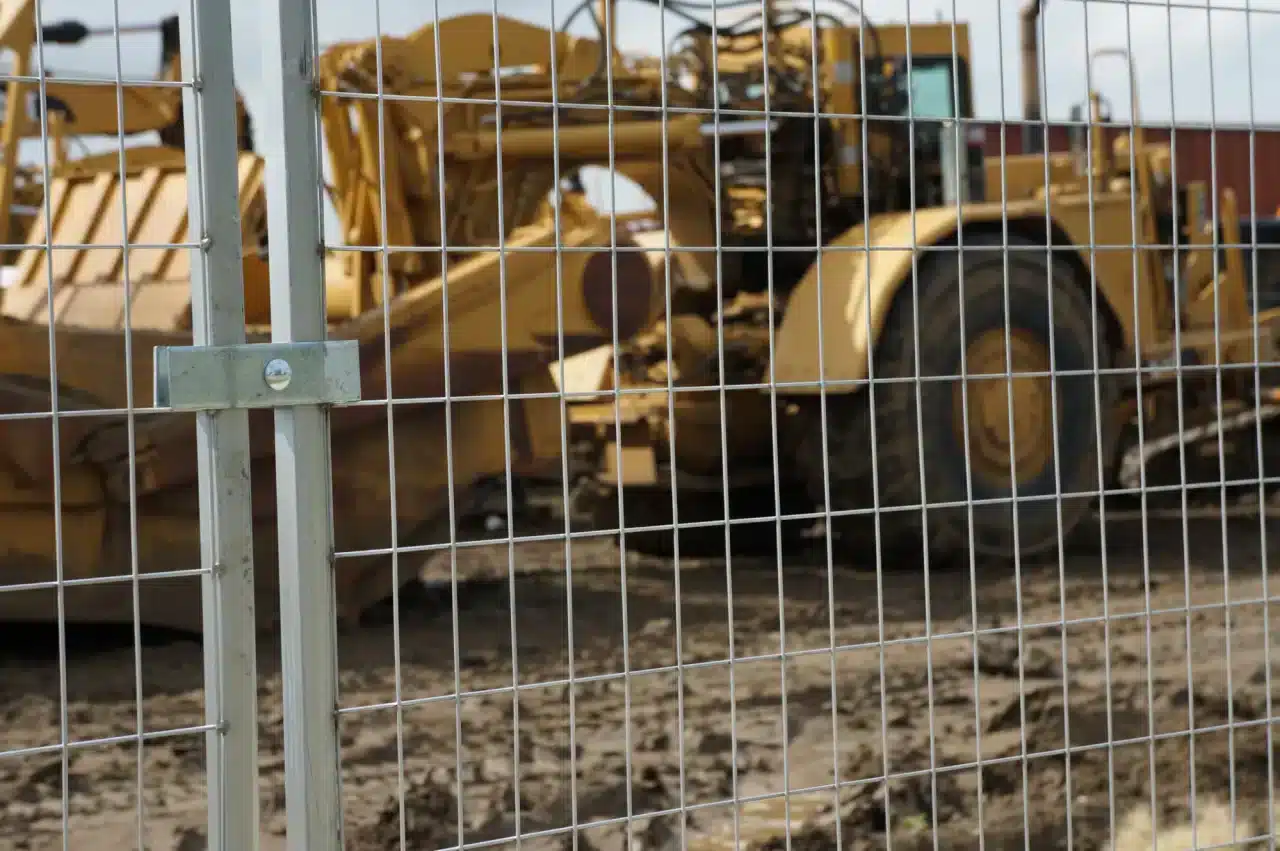
The rules for fencing for construction sites in Alberta are set out in the National Building Code – Alberta Edition (Part 8, Safety Measures at Construction and Demolition Sites). They dictate that:
- If a construction or demolition activity is 2 metres or more from a public way, a fence that’s at least 1.8 metres high will be erected
- Where access is needed for workers or vehicles, the fence will be equipped with a gate that can be opened, closed and locked
- The fencing needs to be up for the duration of the project
In both Calgary and Edmonton, an outline of your construction fencing is often required as part of the building permit process. Failing to meet these requirements is a violation of the building code, and Alberta’s Safety Codes Act allows administrative penalties of up to $10,000 per day, to a maximum of $100,000.
All our construction fence rentals comply with local regulations.
The Cost of Skipping Proper Construction Fencing
Fines aren’t the only risk. If a member of the public is injured on an unfenced or poorly fenced site, the contractor can be held liable, leading to legal costs, higher insurance premiums and project delays. Unsecured sites are also easy targets for theft and vandalism, and replacing stolen tools, equipment, or materials can quickly cost more than the fencing itself. A properly installed construction fence protects your budget as much as your site.
Planning Fencing for Downtown & Industrial Sites
Downtown Sites
Downtown sites come with challenges that suburban and industrial sites don’t: steady foot traffic, busy roads, neighbours living and working close by, and a higher risk of theft and vandalism. Your fencing needs to secure the site while keeping the public moving safely around it.
Pedestrian Routing & Sidewalk Closures
Downtown projects often need to close part of a sidewalk or redirect foot traffic around the work area. Temporary fencing for construction creates a clear, continuous barrier that guides pedestrians safely past your site, whether you’re closing a sidewalk entirely or narrowing it to a protected walkway.
Because sidewalks are public property, closures in Calgary and Edmonton usually require a permit from the city, so it’s worth confirming the requirements early in your planning. FenceLine can help you plan a fence layout that keeps pedestrians moving safely while giving your crew the space it needs.
Industrial Sites
Industrial sites need fencing that holds up to heavy equipment, long project timelines and a higher security risk. For these sites, we recommend:
- Super clamps: heavy-duty steel construction for maximum strength, with a three-bolt system that can only be removed from inside the fence line.
- Heavy-duty bases: an electro-galvanized plate with solid rod verticals welded to the top and bottom for extra stability.
- Vehicle and pedestrian gates: separate access points for equipment and crews.
- Heavy Duty or Super Heavy Duty panels: see our panel grade comparison to choose the right grade.
Choosing Construction Fencing for Alberta’s Climate
Calgary and Edmonton fencing has to handle Chinook winds, heavy snow, ice and road salt. Look for three features: a hot-dip galvanized finish to resist rust and corrosion, welded wire mesh for strength without catching too much wind, and square tube frames that stay upright under wind and snow loads. All FenceLine panels are built this way. For how long panels last on site, see How Long Does Temporary Fencing Last?
Built to Last
Because our panels are galvanized to resist rust and corrosion, they stay in service for years and can be reused from project to project. Renting keeps that equipment in circulation instead of sending single-use fencing to the landfill, and our used panels and hardware give contractors a lower-cost option that extends the life of every piece.
How Much Temporary Fencing Do I Need?
Start with your site’s perimeter. If you don’t already have your site’s perimeter measurements, Google Earth’s measuring tool can give you a good estimate.
Once you have the site’s perimeter, divide it by the length of the fence panels you’ll use. Here’s the basic equation:
- Perimeter length / 10 feet = number of fence panels to rent or purchase
Then add hardware using the quantities above (2 couplers, 2 clamps and 2 bases per panel) and decide where your gates go. For a step-by-step measuring guide and typical rental costs, see What Does a Temporary Fence Rental Cost in Calgary?
When to Book Construction Fencing
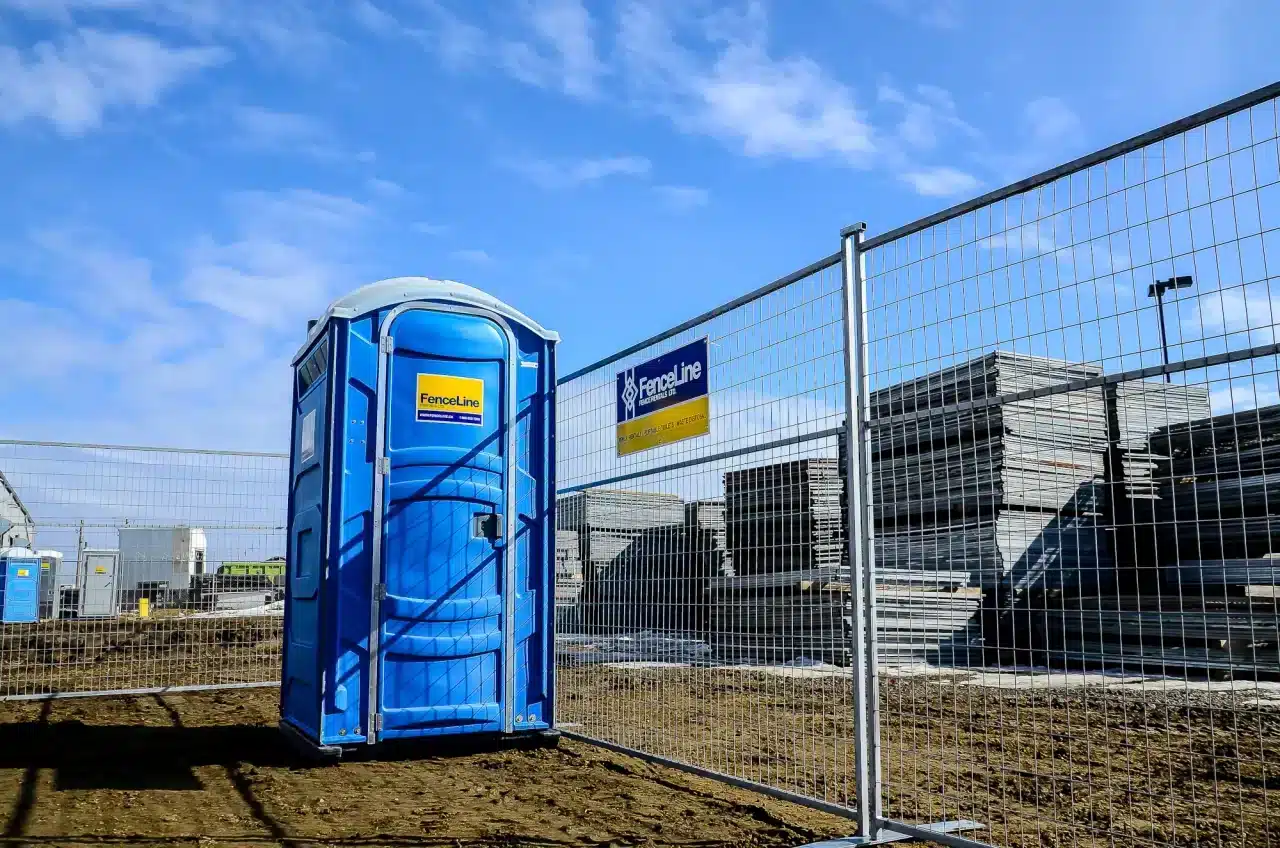
Spring and summer are Alberta’s busiest construction seasons, so book your fencing as early as possible, ideally as soon as your project start date is set. Remember that your fence layout may also be needed for your building permit, so planning it early helps on both fronts. If you need fencing on a tight timeline, contact us and we’ll let you know what’s available.
Ready to Plan Your Site Fencing?
Whether your site is in Calgary, Edmonton or elsewhere in Alberta, FenceLine will deliver, install and remove your fencing.
Send us your site perimeter and project dates, and get a quote today.
FAQs About Construction Fencing
How far ahead should I book fencing for my site?
Timing depends on the size of your order, your site’s location and the time of year. Spring and summer are the busiest seasons for construction in Alberta, so we recommend booking as early as possible. If you need fencing on a tight timeline, contact us, and we’ll let you know what’s available.
Is there a minimum rental period?
No, we understand that construction projects vary in length in Alberta, and there is no minimum rental time.
Are permits required for construction fencing?
No, permits aren’t required for temporary fencing if it’s set up on private property. However, a permit may be needed if it is on public property.
What is the purpose of a construction fence?
A construction fence secures your job site by keeping the public out of hazardous work areas, deterring theft and vandalism of equipment and materials, and guiding pedestrians safely around the site. In Alberta, it’s also a building code requirement for most construction and demolition sites near a public way, which helps protect contractors from fines and liability.
Who installs and takes down construction fence rentals?
FenceLine will deliver and install construction fence rentals in Edmonton, Calgary, or anywhere across Alberta. At the end of your job, we’ll take down the fencing and remove it.