
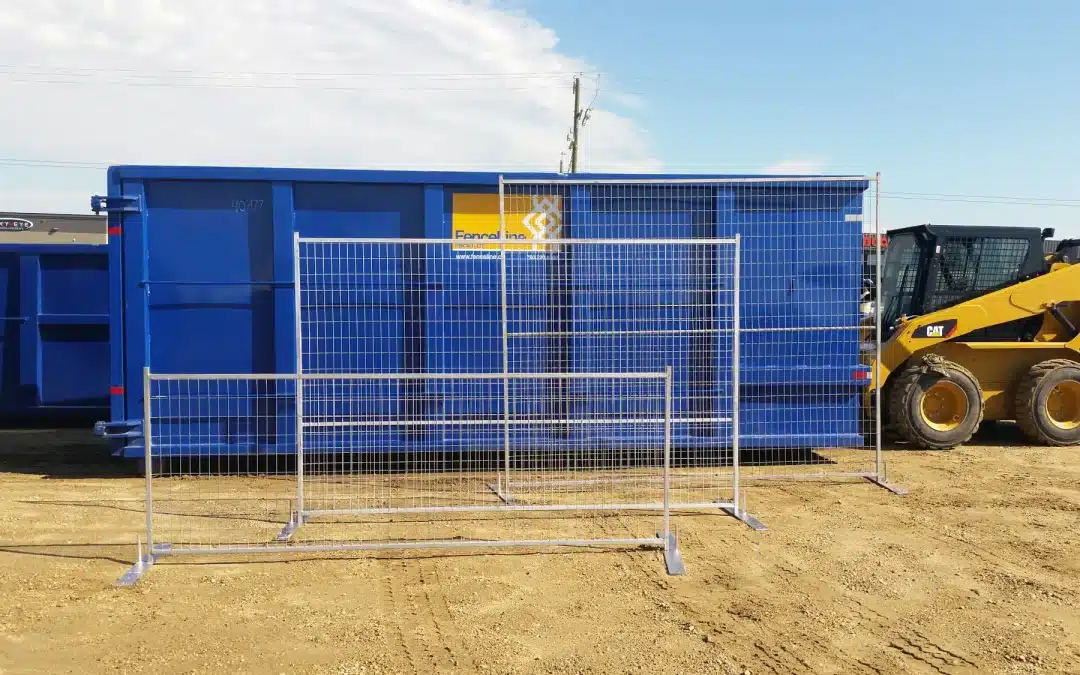
Starting a construction project? You’ll need a construction fence to keep your site safe, secure, and compliant.
If you’ve chosen to buy temporary fencing rather than rent it, you’ll need to ensure you have all the right pieces. This includes:
- Fence panels, in the right height, width, and durability
- Hardware, like clamps, bases, and couplers
- Gate systems, deluxe, basic, or with caster wheels
Read on to find out more about temporary construction fencing, including goals, where to use it on your site, and what you’ll need to create the right fence system for your project and team.
What Are the Goals of Construction Fencing?
You have a big project coming up. One of the most important steps you’ll need to take is to buy the right fencing. Why? Temporary construction fencing serves several important purposes, including:
- Safety: It keeps both the public and workers safe from construction hazards.
- Security: It helps prevent theft of construction materials and equipment.
- Privacy: It blocks the view of the construction area from passersby and nearby properties.
- Regulatory Compliance: Many areas have laws that require fencing around construction sites.
Of course, it’s possible to buy the wrong fence for your job site, so understanding where you’ll be using it and the exact purpose it’s serving is important.
How Temporary Fencing Ensures Safety
- Guarantees the safety of pedestrians who may be curious or looking for an easy shortcut. Most importantly, it protects children who tend to wander around construction sites and hurt themselves.
- Keeps pedestrians away from areas where heavy machinery is being maneuvered. It can also close off areas where things can be dropped from cranes. By closing the area where accidents could happen, you eliminate the possibility of anyone getting hurt.
- Prevent people from falling into construction ditches, being harmed, or being run over by heavy equipment.
- Helps keep traffic organized. Angry drivers or taxi drivers unnerved by the slow traffic of the construction site might try to cut through. The fencing will prevent them from doing so and will keep them in line.
Where Do I Use Construction Fencing?
Using construction fencing around the perimeter of your job site is its most obvious application, but it can serve multiple purposes at the same property, including:
- Surrounding Junk Piles
- Protecting Heavy Machinery
- Designating Safe Walkways
- Containing Hazardous Materials
- Securing Perimeter
- Preserving Vegetation & Sensitive Areas
- Compliance with Regulations
- Event Security
- Noise Reduction
Understanding all the locations and situations where your temporary fencing will be needed before ordering is a good idea.
What Do I Need to Set Up a Construction Fence?
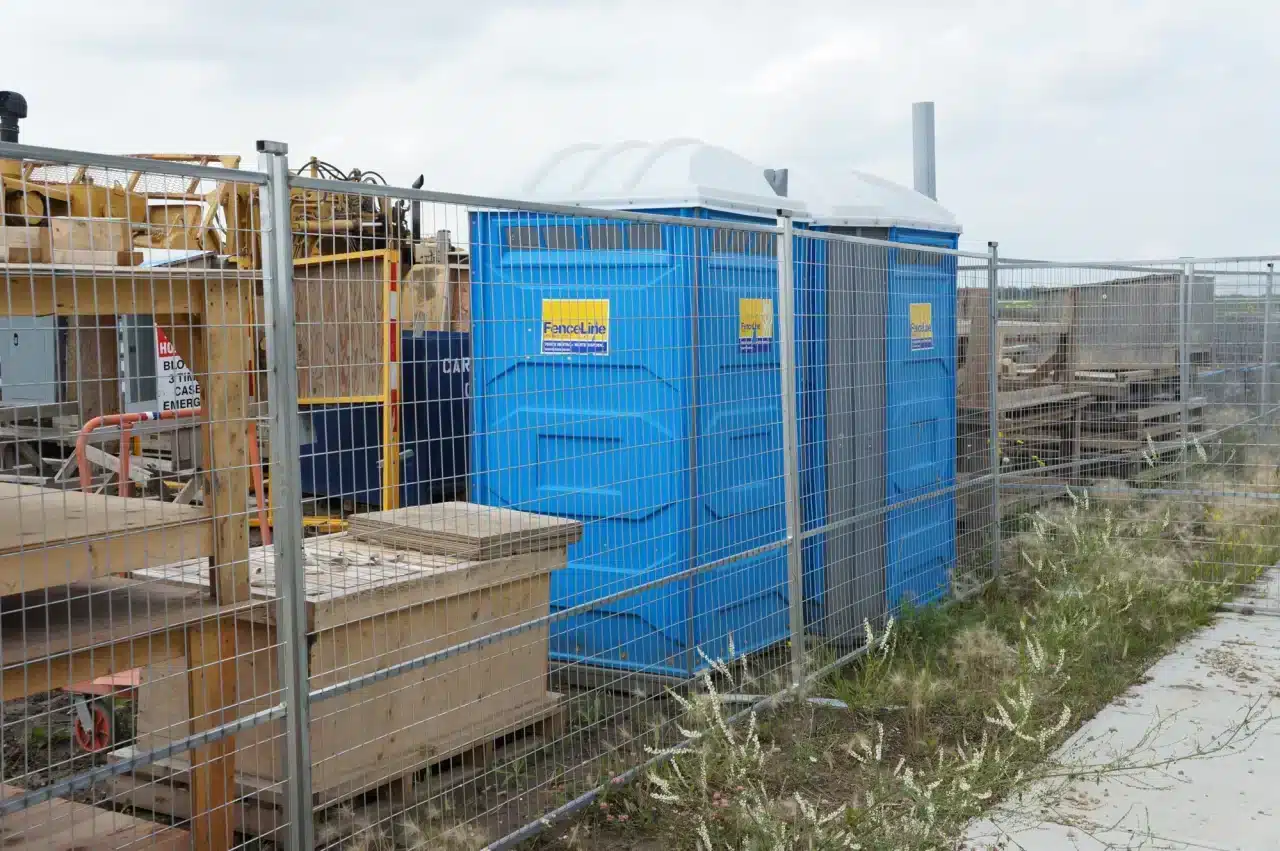
Here’s what you’ll need to set up a construction fence:
Construction Fence Panels
These are the main parts of the fence. They are typically made from sturdy materials like steel and are designed to withstand outdoor conditions. FenceLine offers the following types of temporary fences:
- New & Used
- Standard & Heavy Duty
- Panel Only & Panel Sets
Fence Hardware
Fence hardware will connect your fence panels and ensure they stay secure and upright. We offer both new and used hardware for sale, including:
- Couplers: You’ll need a minimum of 2 couplers per panel.
- Security Clamps: We recommend a minimum of 2 clips per panel.
- Super Clamps: Minimum of 2 clips per panel.
- Bases: 2 bases per fence panel.
- Caster Wheels: 1 wheel per gate panel.
Gate Systems
For easy access to the site, you’ll need temporary fence gates. These will help your workers and any visitors enter and exit easily without disassembling the fence panel.
We offer new and used:
- Deluxe gates with hinged frames
- Basic 6’x4’ gates
- Caster gates
- Heavy-duty 6’x6’x panel gates
How Much Temporary Fencing Do I Need?
How can you know how much temporary fencing you’ll need for your construction site? If you have the perimeter measurements of the site you’ll be operating at, this is a great advantage. But if you don’t, use Google Earth to measure. This handy app has a measuring tool you can use to get the approximate measurements of your site.
Once you have the site’s perimeter measurement, divide it by the length of the fence panels you’ll be using. FenceLine’s construction fence panels are 10 feet wide. Here’s the basic equation:
- Perimeter length / 10 feet = number of fence panels to purchase
Want more help? Contact our knowledgeable team at FenceLine Rentals Ltd.
Are These Fence Panels Built for Alberta’s Climate?
In a cities like Calgary and Edmonton, where the weather can be extreme, it’s important to have construction fencing that can withstand the elements. The good news is that the products carried at FenceLine Rentals are all designed to stand tall in the deepest, darkest depths of winter—and summer, too.
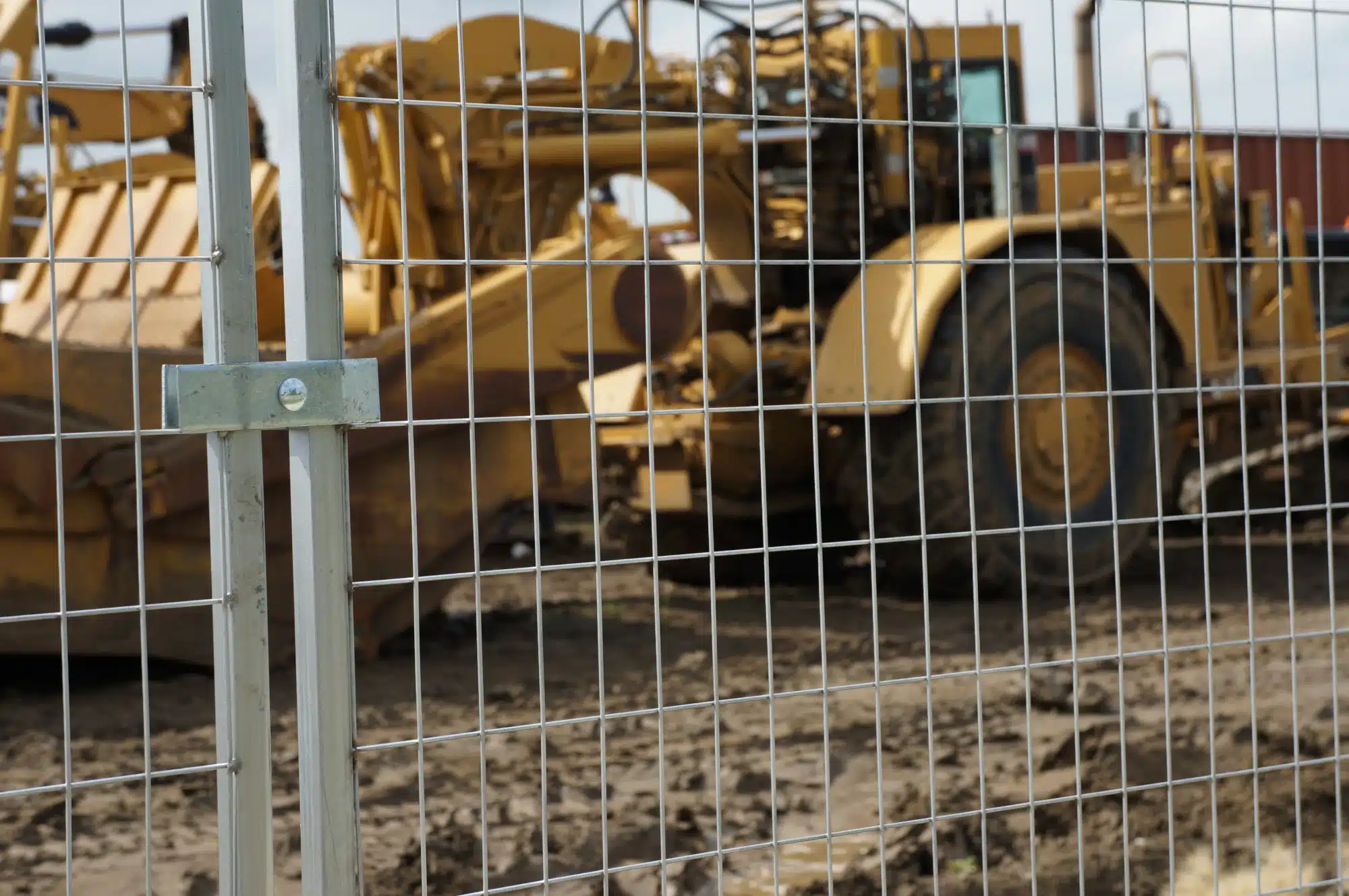
Our fence panels have welded wire mesh construction and square tube frames, and they’re hot-dipped with a galvanized finish, so you can rest easy knowing they’re built to withstand the elements in Alberta.
Why Do These Features Matter in Calgary & Edmonton?
Hot-Dipped Galvanized Finish
This finish protects the fence panels from rust and corrosion, common issues in Calgary’s variable climate. Between the moisture from rain and snow and the salts used on roads during the winter, unprotected metal can quickly break down.
Welded Wire Mesh
Combined with the galvanized finish, these features ensure the fence can withstand Calgary’s variety of weather conditions without compromising structural integrity. The wire mesh also helps with Calgary’s Chinook winds, which can reach high speeds.
Square Tube Frames
Square tube frames ensure the fence panels remain upright in strong winds, reducing the risk of damage or movement. This feature also provides strength and stability, ensuring fence panels can withstand the weight of snow and ice without warping or breaking.
Temporary Fencing Best Practices
Following the best practices for temporary fencing installation, maintenance, and use will help ensure your construction site meets municipal regulations.
Fencing should be installed:
- Before demolition or construction begins
- Within the property line
- With permission from the neighbouring property
- Without obstructing public access to businesses, amenities, or sidewalks
- Able to withstand wind and other types of weather
In addition:
- Fencing can be open while workers are on site, but needs to be secured at the end of the day or if the site is left unattended.
- If there is any damage to your fencing, it should be resolved quickly.
How to Make Temporary Fencing Last
Installing portable fence panels correctly can make a huge difference in their lifespan and requires a little planning, too. Ensuring that your temporary fencing is installed in an area where it can withstand severe weather and wind may seem obvious, but a little planning can go a long way toward preventing the damage that extreme weather can cause.
Ensure a Stable Foundation
If you’re on a new site, whether for a construction project or an event, make sure that the ground on which you’re setting up your temporary fencing is solid and will not turn into a muddy mess if it rains. You want solid, stable ground.
Make Sure You’ve Got the Right Hardware
Ensure you have the appropriate amount and type of couplers, clamps, bases, and caster wheels.
Install Your Temporary Fencing at the Right Time
Yes, this sounds obvious, but you’ll want to install your temporary fencing before you begin a construction job or start welcoming guests to your event. You’ll also want to take it down after everything is wrapped up.
Any local bylaws and regulations likely require this, but ensuring you’re not putting up your temporary fencing in the middle of a whirlwind of activity will be safer and prevent accidents that result in damage.
Regular Maintenance Works Wonders
Temporary fencing is generally low maintenance, but that doesn’t mean it requires no maintenance. Especially in Alberta, where the elements can take their toll on anything and everything set up outside, regular maintenance can considerably extend the life of your temporary fence panels.
Some tips for maintaining temporary fence panels include:
- Perform inspections: A little inspection can go a long way. Simply checking to ensure there is no rust, damage, or areas that need cleaning or a touch-up can help prevent further issues. Ensure that anchors and connectors are tight.
- Clean regularly: Regular cleaning doesn’t just make your temporary fencing look better; it also helps prevent deterioration. Scrubbing with water and a mild detergent is a big help.
- Prevent rust: Rust can cause real issues for temporary fencing, so touch up any worn-down painted areas and treat any spots that show rust immediately.
Proper Storage Prevents Damage
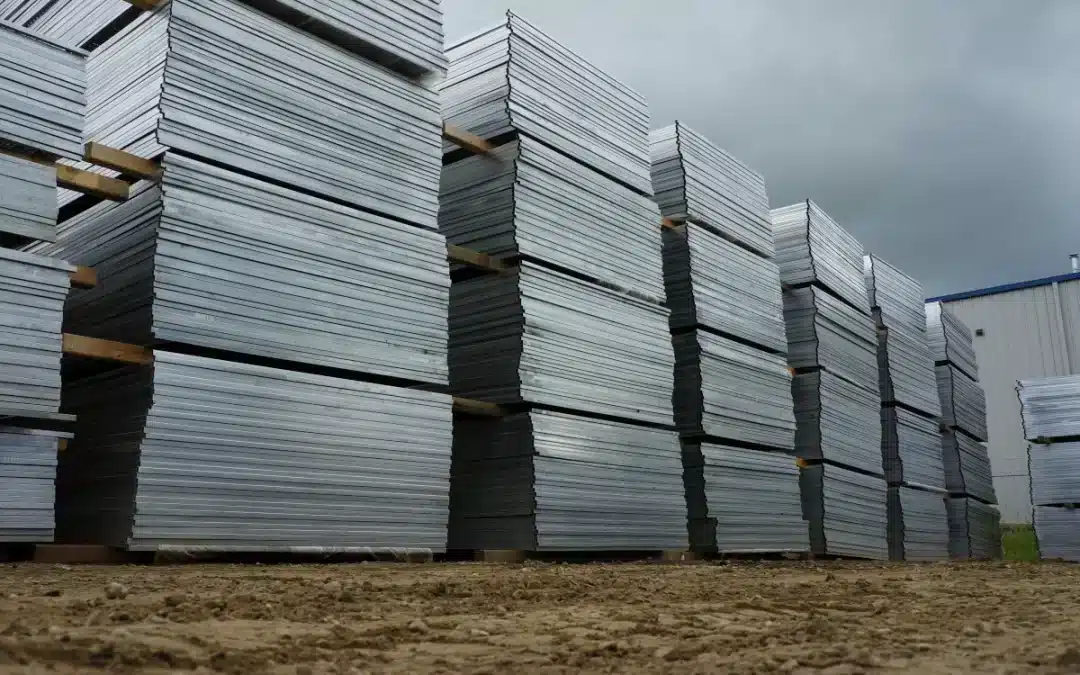
When installing or taking down your temporary fence panels, be careful. If you’ll need to store them in between projects, stack them in an organized way and try to keep them in a dry and protected location. The less moisture, the better.
How Can I Secure My Construction Site with Temporary Fencing?
Temporary fencing is a great tool for protecting your construction site, but it must be installed with some foresight. Ask yourself these questions before you begin:
How high will your fence be?
The taller the fence, the harder it is to climb. Our temporary fencing comes in 4, 6, and 8-foot heights. You are more secure going with the 8-foot heights because it is a better deterrent for impulse vandals and trespassers. Also, our narrow mesh provides additional protection, making it much more challenging to climb the fence.
How many gates will you have?
The more gates you have, the easier your perimeter is to breach. Minimize the number of gates through the perimeter if possible. This is also important for general liability, as you can control traffic coming and going from the site with just one construction entrance. Narrower gates are better, but make sure they’re at least 20 feet wide to allow access for emergency vehicles.
Gates should be operational by one person. Try to avoid wheels dragging on the ground. Gates should be cantilevered so that the gate swings freely over temporary rock surfaces.
How can you secure your fence and gates?
Ideally, the fence is set with posts driven into the ground. This is not always possible, so using sandbags is necessary to secure the fence over the paving. Make sure your fence contractor provides at least two sandbags per post. Gates may be secured with chains and padlocks or with other precautionary measures.
Do employees park inside or outside the fence?
You will see a decrease in equipment and material loss if you require others to park outside the fence and have controlled access.
Do you have adequate fence signage?
It is not enough to simply have a physical barrier. You must have adequate signage that explicitly tells others to stay out and stay clear. Though it may be obvious, for insurance purposes, it will significantly reduce your liability if you communicate a clear message.
Why Is Temporary Construction Fencing a Sustainable Option?
Whether or not you’ve used temporary fencing for a construction site before, you may not be aware of its sustainability benefits. Here are some reasons why choosing temporary construction fencing can help you reach sustainability goals:
Reusable & Durable
Not all construction fencing is equal in terms of durability. In Calgary and Edmonton, construction fencing must be rigid to withstand windy, cold, and hot conditions. The temporary fencing you choose should be made with hot-dipped steel with a galvanized finish to ensure it lasts for years.
In general, temporary fencing is designed to be reused multiple times across many different projects. This reduces the need for new resources, minimizes waste, and aligns with sustainability goals.
Recyclable
Not every fence is made sustainably, nor is every material easy to recycle. The City of Calgary proclaims that construction sites must have a “strongly constructed fence” or barricade, but it does not specify which material your fence or barricade must be made from.
This means you have a choice. Steel is one of the easiest materials to reprocess, making it one of the best choices for sustainability on your construction site.
Flexible Usage
One of the most significant advantages of choosing temporary construction fencing is its flexibility—not in terms of the material but in terms of how it can be used.
FenceLine rents and sells temporary fence panels that can be used for many different purposes around your job site. We also offer gates and casters for easy entrances and a range of hardware.
For example, if you’re working on a large project one year and have two small projects the following year, you can own your fencing and simply divide it into two locations and configure it as needed.
Installing chain link fencing won’t give you that benefit.
Reduces Site Disturbances
Defining clear boundaries with your construction fencing will minimize the disturbance area around the site. This protects nearby ecosystems and reduces the site’s environmental footprint.
Think of it this way: Your construction project is near a sensitive wetland area. You install temporary fencing, limiting the movement of machinery and materials to a predefined area. This prevents accidental spills and disturbances in the wetland, preserving the natural habitat.
FenceLine Has the Temporary Fencing Your Construction Site Needs
Temporary fencing is critical on construction sites. It provides security while also keeping both workers and the public safe. Every site is different, though, and with Alberta’s often challenging weather conditions, it’s important to get strong, stable, and durable construction fencing that is built with the province’s requirements in mind.
That’s where FenceLine comes in. Our temporary fence panels will meet the needs of any site, whether that’s in a crowded urban downtown or a remote rural location.
To get quality construction fencing, call us at (780)720-6300 or contact us online.
FAQs About Construction Fencing
How much maintenance is required for temporary fencing?
A little bit goes a long way. Regularly checking for damage, storing your fence panels carefully, and routine cleaning can all help maintain the integrity of temporary fencing.
Is it better to rent or buy temporary fencing?
This depends on the reasons you need temporary fencing. Renting is often more cost-effective for short-term projects or events. However, buying could be a smarter investment if you frequently need fencing for projects, as it can be reused and doesn’t require recurring rental fees.
What is the easiest fencing to install?
Panel fencing is the easiest to install because it comes in pre-assembled sections that just need to be connected and stabilized. It’s ideal for quick setup and teardown scenarios