

Temporary fencing for dogs gives your pet a safe, secure space to run and play without committing to a permanent fence. That makes a temporary dog fence a practical option for renters, homeowners who aren’t ready to commit to a permanent installation, and anyone whose needs might change in a year or two.
FenceLine’s panels go up and come down quickly, and they’re built to handle snow, wind, and Alberta’s freeze-thaw cycles, so the same setup works year-round.
Here’s how to build a temporary dog fence that’s right for your dog and your property.
Key Takeaways
- A temporary dog fence gives your pet a secure outdoor space without a permanent installation, making it a good fit for renters, changing needs and short-term situations.
- Temporary dog fence panels are stronger and more reliable than DIY options, and less costly and stressful for your dog than an electric fence.
- Dog run size depends on your dog: 10′ x 8′ to 10′ x 12′ suits small dogs, 20′ x 8′ to 20′ x 12′ suits medium dogs, and 20′ x 20′ works for large dogs.
- With the right shelter, surface and anchoring, a dog fence works through all four Alberta seasons.
What Is a Temporary Dog Fence Made From?
FenceLine’s temporary fence panels are made from square tube frames and welded wire mesh, with a hot-dip galvanized finish. Fence hardware, including clamps, couplers, and gates, is added for security and convenience.
Comparing Temporary Dog Fence Panels with Other Options
| Type of fencing | Advantages | Disadvantages |
| Panels | Durable and safe for pets, easy to configure around any yard shape, good visibility for keeping an eye on your dog, and able to withstand wind, snow and freeze-thaw cycles | Needs space and some setup |
| Mesh or netting | Inexpensive, lightweight and quick to move | Easily chewed, pushed through or knocked down; not suited to strong or determined dogs, and sags over time |
| Electric fences | Added security, and some modern systems use GPS to track your pet | Expensive, can be stressful for your dog, needs ongoing maintenance, and offers no physical barrier against other animals |
| DIY fences | Cheap, and may be enough for some smaller pets | Often unreliable, unattractive, and unable to stand up to harsh weather |
How to Measure for Your Dog Run
The larger your dog, the more space they’ll need. In most cases, we recommend the following sizes:
| Size of your dog | Recommended size of dog run |
| Small dog | 10’ x 8’, 10’ x 10’ or 10’ x 12’ |
| Medium dog | 20’ x 8’, 20’ x 10’ or 20’ by 12’ |
| Large dog | 20’ x 20’ |
Once you know what size you need, see our dog run packages to rent or buy a complete setup.
Is Temporary Dog Fencing Right for Your Pet?
Temporary fencing for dogs is incredibly versatile and can cater to many dog breeds and behaviours. At FenceLine Rentals Ltd., we offer fence panels, custom gates, and accessories to secure the panels together and to the ground. This type of fencing is ideal for:
- Serving as a temporary fence for renters who may move homes in the future
- Homeowners with limited outdoor space
- Temporary situations where your pet’s needs may change
- Specific training purposes
- During short stays away from home
- Homeowners who want an affordable, easy-to-install option
How Do You Install a Temporary Dog Run?
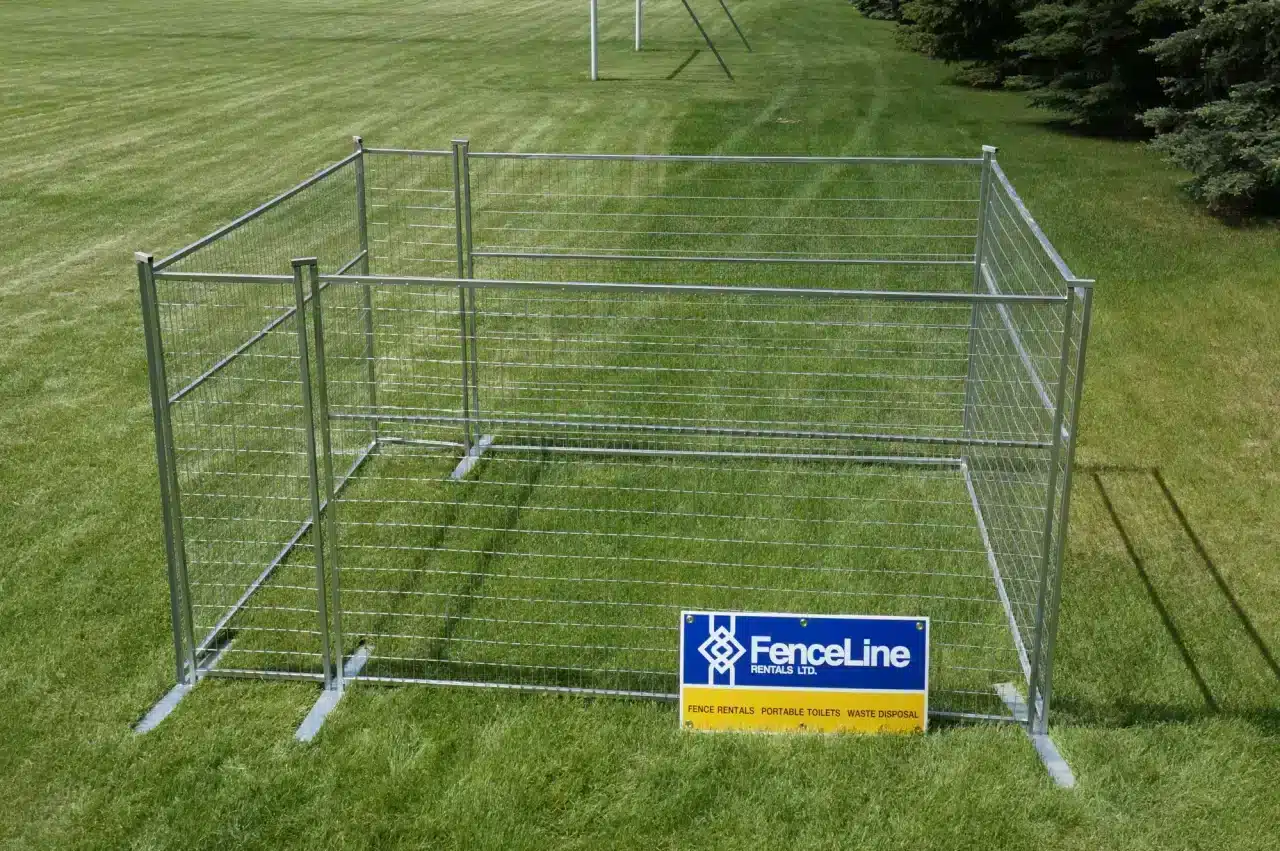
1. Use the Right Fencing
The right fencing is critical for any dog run, and it goes beyond big dogs that jump and need high fences. Especially in Alberta, where our winters can be harsh, but dogs still need to get outside and exercise, it’s important to have durable, high-quality temporary fencing for your dog run.
We provide panels in all shapes and sizes for dog runs, fully customizable to your pet and property size.
- We offer large 8×10 panels for larger dogs and security clamps for added strength.
- With a variety of panel options, FenceLine’s temporary fence panels can be installed on almost any property configuration.
- Heavy-duty bases, clamps, and gates will secure pets while you’re inside or even away.
2. Consider Gate Security
Your dog will need to get in and out of the dog run, so it’s important to have a gate that closes securely. FenceLine offers basic and deluxe 6×4’ gates that come with easy-to-use latches. They’re convenient, safe, and secure.
3. Find the Right Location
Many properties have space limitations, but with the right fence panels, you can still create a dog run that gives your pet plenty of room for outdoor exercise.
There are some things to consider, though:
- Sun and shade: A balance of sun and shade is ideal, as it lets your dog cool down in the heat of the summer and warm up when the weather is a little cooler. If there’s nowhere with shade on your property, consider adding a shelter to your dog run.
- Noise and traffic: This is especially true for excitable dogs, but picking a location where they won’t be distracted by other animals or traffic will make the dog run feel less chaotic.
- Flat space: This isn’t 100% necessary, but setting up temporary fencing on a flat space is easier.
5. Select a Surface for Inside the Dog Run
Temporary fencing can be installed on uneven ground, but most dog runs will require a grass surface, which is great for dogs to run and laze about. But it does require regular maintenance, including weeding, mowing, and picking up after your animal.
Other options include:
- Dirt or sand: These are easy to maintain and won’t be hard on your dog’s paws as they run around. A little maintenance to prevent compaction helps.
- Artificial turf: Drains easily, looks great, and provides a soft surface for your dog to exercise.
- Gravel: It isn’t as comfortable on some dogs’ feet, but drains easily and is simple to maintain.
5. Anchor the Fence Securely
Alberta wind can move an unsecured panel, so anchoring matters as much as the panels themselves. Heavy-duty bases keep each panel upright and stable, while clamps and couplers lock the panels together, leaving no gaps for your dog to push through.
Check your anchoring after heavy wind or a freeze-thaw cycle, since shifting ground can loosen a base that was solid when you set it up.
How Do You Build a Warm, Safe & Comfortable Dog Run?
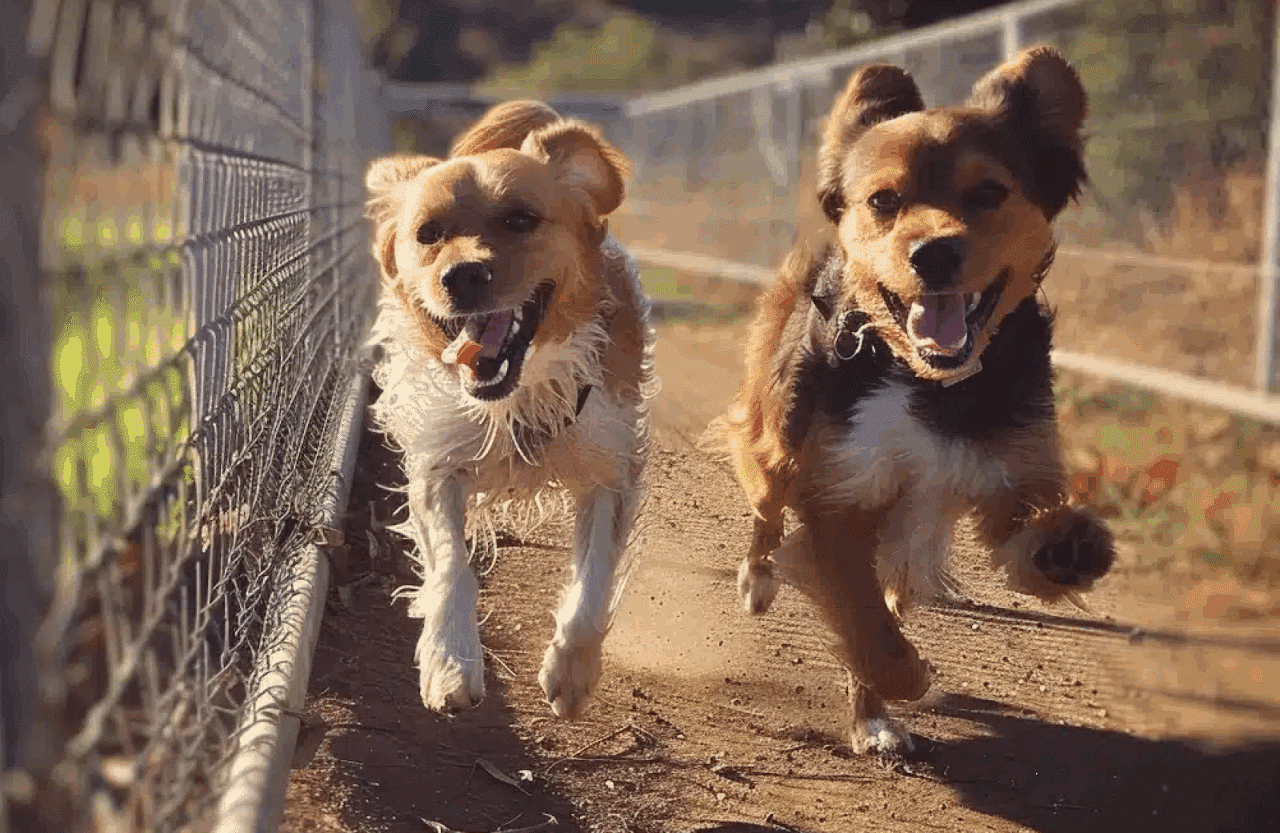
Alberta’s winters are harsh. FenceLine Rentals’ temporary fencing is built to withstand snow, wind, and freeze-thaw cycles, but you’ll still need to ensure your setup is safe and comfortable for your dog.
Weatherproof the Dog Run
To ensure your dog run fence stands up to all types of weather, incorporate weatherproof materials and proper drainage. This prevents the area from becoming a muddy mess when it rains. Consider elevating the shelter area slightly and using sand or gravel for better water runoff.
Including a covered shelter within the dog run protects your pup from rain, wind, and even snow, keeping the space usable year-round.
Ensure Warmth & Comfort
Your dog’s comfort is paramount—especially in colder months. Opt for comfortable, insulated bedding and consider adding a heated pad designed specifically for outdoor use. Ensure any electrical installations are safe and dog-proof.
For added warmth, installing windbreak panels can significantly cut down the chill and make the space cozier on windy winter days.
Keep Dogs Entertained & Happy
Dogs need more than just physical space—they need stimulation. Fill the run with safe, durable toys that encourage play and mental engagement.
Consider rotating the toys to keep your dog interested and engaged. Agility equipment, like tunnels and jumps, can also be great additions for extra fun and exercise if you have the space. Other ideas include:
- A dog pool: Perfect for playtime in the summer and keeping your dog cool
- A dog house: Great for when your pup needs some downtime
- A dog ramp: Adds variety to their exercise
- A weather door: Allows dogs to enter and exit your home and their outdoor area on their own time
- A waste station: Keeps the area clean and reduces your work
Alberta’s winters are harsh. FenceLine’s temporary fencing is built to withstand snow, wind, and freeze-thaw cycles, but you’ll still need to ensure your setup is safe and comfortable for your dog.
Find Quality Dog Run Fencing at FenceLine
Whether you need a long-term dog run or temporary fencing while renovations are underway, FenceLine Rentals Ltd. offers a range of panels, gates and accessories at an affordable price. Contact us today.
FAQs About Temporary Dog Fencing
How do you choose the right size and type of fence for different dog breeds?
To find the right size and type of temporary dog fence for your dog’s specific breed, consider their:
- Size and length
- Jumping or climbing ability
- Behaviour and temperament
- Space and area layout
- Visibility and social needs
How do you ensure the safety of the dog fence?
To keep your dog fence safe, install it properly. Check for gaps and weak points, and cover sharp edges with smooth protective materials, but make sure they’re non-toxic for animals. Ensure the fence can hold up in local weather conditions like strong winds and snow, and check the fence for wear and tear regularly.
Should I rent or buy a temporary dog fence?
This depends on your needs. Renting is great for events, anyone renting a home who may move, or anyone seeking a short-term solution. Buying a temporary dog fence, on the other hand, is perfect for dog owners looking to build a permanent play area.
Will FenceLine Rentals help set up my temporary dog fence?
Absolutely. If you need help setting up your temporary dog fence our team is happy to provide any help and support we can. For your pet’s safety, any temporary dog fence should be set up properly.
Can you set up a temporary dog fence in a small backyard?
Definitely. Setting up a temporary dog fence in a small backyard is completely possible, and we can help you pick the right panels for any space. Many pet owners even set up fencing along the side of their homes to give their pets a comfortable outdoor space.