
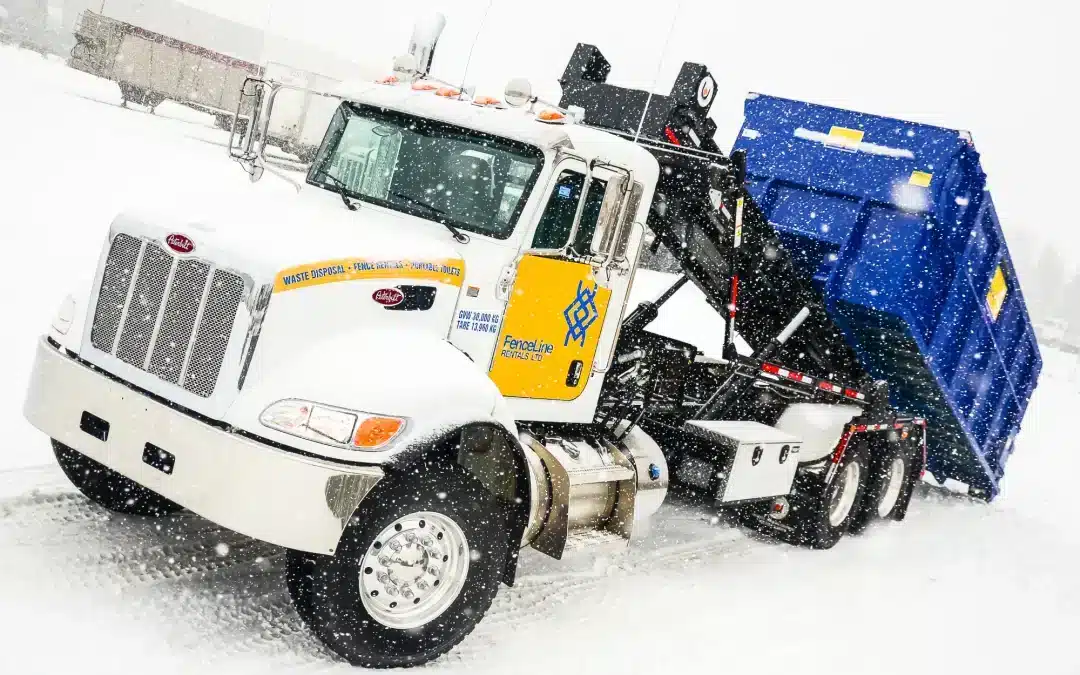
Working outside in winter conditions presents real risks on construction sites, making winter construction safety a critical responsibility for employers and site managers. Ice, wind, snow, and prolonged exposure to extreme cold increase the likelihood of accidents, injuries, and equipment issues if not properly managed.
With the right winter construction safety measures in place, projects can continue without unnecessary delays. Below are practical safety considerations to help reduce risk and keep your site operating safely throughout the winter months.
Key Takeaways
- Winter construction in Alberta presents increased risks due to cold temperatures, ice, snow, and reduced visibility.
- Employers are responsible for maintaining worker safety year-round, even without specific cold-weather thresholds in Alberta OHS legislation.
- Proper winter clothing and layered PPE help keep workers warm, alert, and productive.
- Snow and ice management is critical to preventing slips, falls, and equipment instability on construction sites.
- Vehicles and heavy equipment must be winterized to operate safely in extreme cold.
- Temporary fencing must be strong enough to withstand wind, snow, and freezing temperatures.
- Winter-ready portable toilets improve worker comfort and prevent freezing-related issues on site.
Employer Responsibilities for Winter Construction Safety
Construction work doesn’t stop just because the temperatures drop in Alberta. That means anyone managing a work site needs to take steps to ensure that, on any site that does construction, winter safety is taken seriously. While the province’s occupational health and safety legislation does not specifically address working in cold weather, employers are obligated to keep their workers safe at all times of the year.
There are more hazards when temperatures drop and snow starts falling, making winter construction safety especially important.
Your Winter Construction Safety Checklist
Warm Clothing for Workers
Making sure everyone on your job site is dressed for the weather is one of the most important parts of winter construction safety. Most people will know to layer up and wear warm clothing if they’re going to work outside on cold days, but managers on a construction site can also make it mandatory that everyone working on their job site wears appropriate clothing.
This includes:
- Waterproof boots
- Insulated gloves and thermal socks
- Thermal base layers
- Liners for hard hats
Keeping workers warm boosts productivity, but it is also a vital part of winter construction safety because it helps them stay alert and reduces the risk of injury.
Having Extra Layers in Vehicles
Workers who are sitting in vehicles for long periods are especially susceptible to extreme cold. Even in heated vehicles, it’s smart to pack another layer or a blanket. They may not be necessary every day, but they can make a big difference when they are needed.
Snow-Clearing Equipment
One of the most dangerous hazards on construction sites during winter is ice and snow that piles up. Icy conditions can lead to workers slipping and injuring themselves on your site, heavy machinery losing stability, or materials sliding away dangerously.
There are a few things you can do to prevent icy conditions:
- Clear any water that builds up around your site on warmer days where snow might melt
- Have shovels and/or snowblowers on-site to clear work areas, pathways, and parking lots
- Ensure there’s a supply of sand or salt
- Be sure to inspect your site at the beginning of the day for any new dangerous build-ups of ice
- Create a safety equipment checklist you can check regularly
Prepare Vehicles for Winter Conditions
Winter is hard on cars, trucks, and heavy equipment that’s needed on construction sites. Ensuring that they’re ready for the harsh climate can help extend their lives, but it’s also important for winter construction safety.
To make sure your vehicles are ready for the challenges that come with frigid conditions, icy ground, and lots of wind, make sure they are equipped with:
- Winter tires or chains
- Block heaters
- Fully-charged batteries
- Windshield washer fluid that’s suitable for low temperatures
- Ice scrapers and snow shovels
Fencing Built to Withstand Extreme Conditions
Fencing is required on construction sites in Alberta. That’s just as true in the winter as it is in the summer, and you’ll need to make sure that, at the very least, you have fencing set up around the perimeter of your job site.
Getting the right temporary fencing is especially important in winter. Flimsy fencing can blow over in strong winds, and extreme cold can be damaging as well.
Our temporary fence panels and hardware are purpose-built to hold up to Alberta’s extreme fluctuations in temperature and climate, and have a few key features that matter throughout the long winter:
- Hot-dipped galvanized finish that protects fence panels from rust and corrosion, which is especially important in winter when salt is sprayed up from roads or pathways.
- Welded wire mesh that’s strong enough to hold up in Calgary’s mighty Chinook winds and maintains structural integrity.
- Square tube frames provide stability and ensure fence panels stay upright in all conditions.
Toilets Designed for Winter
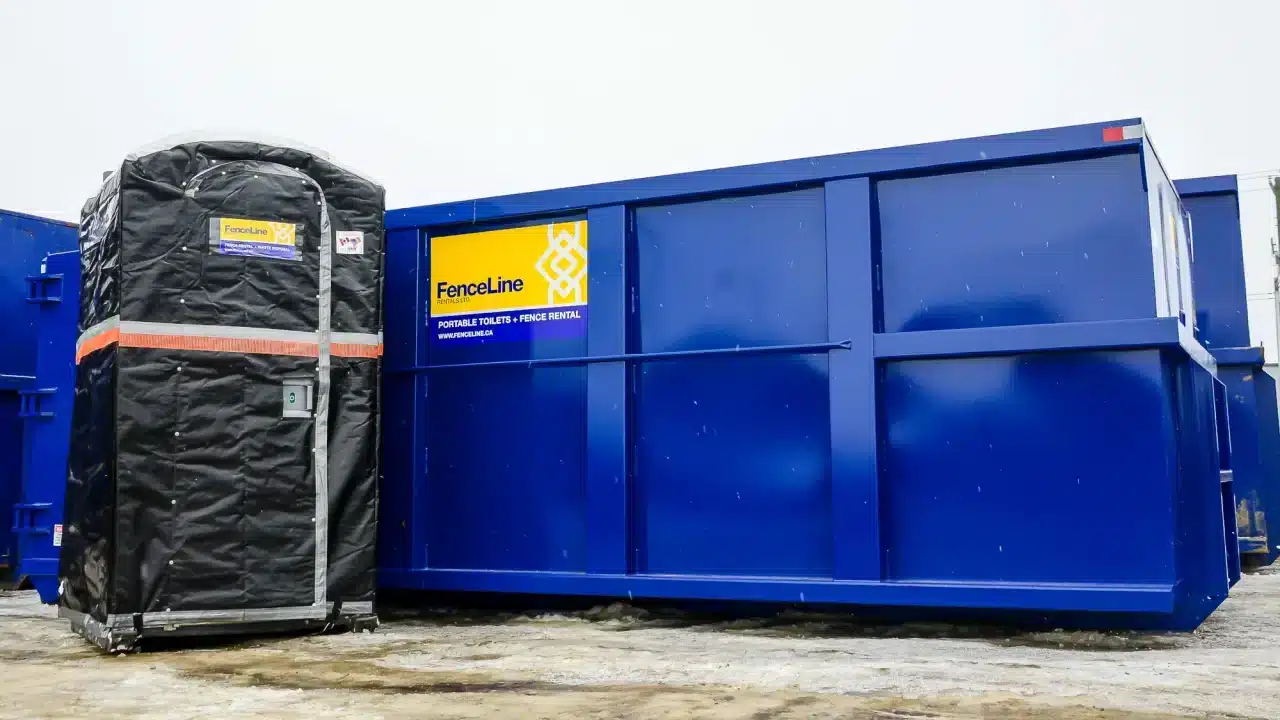
Toilets are important on construction sites, but can present a challenge in the winter. Simply setting up a portable toilet that’s not designed for cold temperatures can lead to challenges with flushing mechanisms, the tank water freezing, and extreme discomfort for anyone who uses it.
There are ways to winterize a toilet, though, and we have portable toilets for rent and for purchase that can withstand the elements and keep anyone who uses them warm and comfortable.
- Warm insulated (jacketed) toilets) are perfect for construction sites and maintain a comfortable temperature, whatever the weather.
- Hardwall/Executive Heated Toilets are extremely sturdy and come with a poly tank and base, as well as a built-in heater.
Build Safely Through Alberta’s Winter
Winter construction doesn’t have to slow your project down—but it does require the right preparation and equipment. From managing ice and snow to ensuring fencing and site amenities can handle extreme cold, winter construction safety starts with planning ahead.
FenceLine provides durable temporary fencing and winter-ready portable toilets designed to perform in Alberta’s toughest conditions, helping you keep your site compliant, safe, and productive all season long.
Request a quote from FenceLine today and get your site ready for winter.
FAQ
What temperature is too cold for construction workers?
Alberta’s occupational health and safety legislation does not have specific rules for when it is too cold for construction workers to work outside. In Calgary and Edmonton, though, many construction sites will shut down work when temperatures dip to -20°C.
Can you do building work in the winter?
Absolutely, construction is a 12-month-a-year industry in Alberta, and work continues throughout the winter. When you take winter construction safety seriously, there’s no reason to delay construction projects until spring.
What are the six hazards of cold stress?
Cold stress is a risk for anyone working outside in the winter. It can be dangerous and lead to hypothermia, which can be fatal. The six hazards of cold stress are:
- Increased risk of accidents and injuries
- Hypothermia
- Frost bite
- Trench foot
- Chilblains
- Cold-induced asthma
How to stay warm in winter construction?
Ensuring that workers are dressed for the weather is the first step. That includes wearing insulated clothing, lots of layers, gloves, and boots. Providing warm, sheltered areas for regular breaks throughout the workday is important, as is having warm, portable toilets.
Why is temporary fencing important in winter?
Winter conditions can weaken or topple poorly built fencing. Heavy-duty, galvanized temporary fencing helps maintain site security and safety in high winds, snow, and freezing temperatures.