
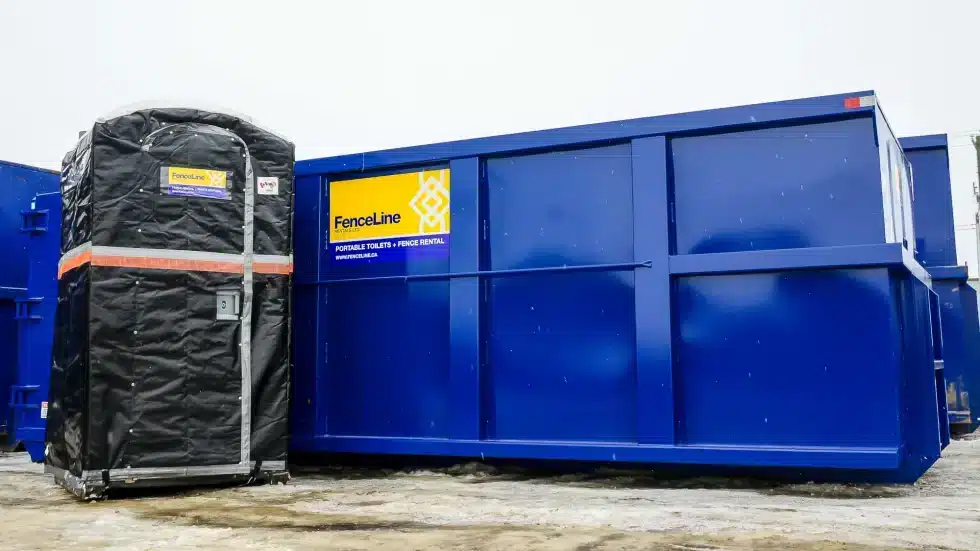
Yes, portable toilets freeze in Alberta, but it’s easy to prevent. The fix is good placement, the right antifreeze treatment and, for long winter jobs, a jacketed or heated unit. When you rent portable toilets from FenceLine, our team handles winter treatment and servicing for you.
Here’s how to winterize a portable toilet, which units suit which jobs, and what to add to your winter job site safety checklist.
Key Takeaways
- Portable toilets can freeze in Alberta winters, but good placement and treatment prevent it.
- Place units in sheltered, sunny spots with the door away from the wind, and keep access clear for service trucks.
- RV/marine antifreeze, salt brine or calcium chloride pellets lower the freezing point of the tank contents.
- For long winter jobs, jacketed (insulated) or heated hardwall toilets keep crews comfortable.
- FenceLine adds winter treatment and servicing to rentals, so you don’t have to do it yourself.
Do Porta Potties Freeze in Winter?
Yes, portable toilets can freeze in the winter, especially in a province like Alberta, where temperatures can drop to -30°C or colder.
The waste tank and the flushing water can freeze, causing blockages that make it unusable. Once frozen, toilets can require full pump-outs, full-day thawing, or complete replacement.
Winterizing your porta potty helps you:
- Prevent waste tank freezing: This can cause blockages and make the toilet unusable, but frozen waste can also be much harder to clean and dispose of, which could damage the tank.
- Assist flushing mechanisms: On flushing units, frozen water lines and pumps can make flushing impossible.
- Ensure comfort: Keeping your portable toilet out of the worst of the winter elements makes it more comfortable for anyone who uses it.
How FenceLine Winterizes Rental Toilets
Regular servicing and maintenance are an important part of what FenceLine Rentals does, regardless of the duration of a project. That is even more essential in winter. Event organizers and site managers don’t need to become winterizing experts, because FenceLine Rentals does it for you. Here’s what’s included:
- Winter treatment at every service. We add antifreeze treatment to the holding tank and refresh it at each visit.
- Regular servicing: full pump-outs, interior cleaning, restocking and odour control, scheduled around your crew size and usage.
- Placement advice to protect units from wind, snow and drifts.
- Jacketed and heated hardwall toilets for long winter jobs, with space heaters in heated units (these require a power source).
- Winter rates run from late September to mid-April.
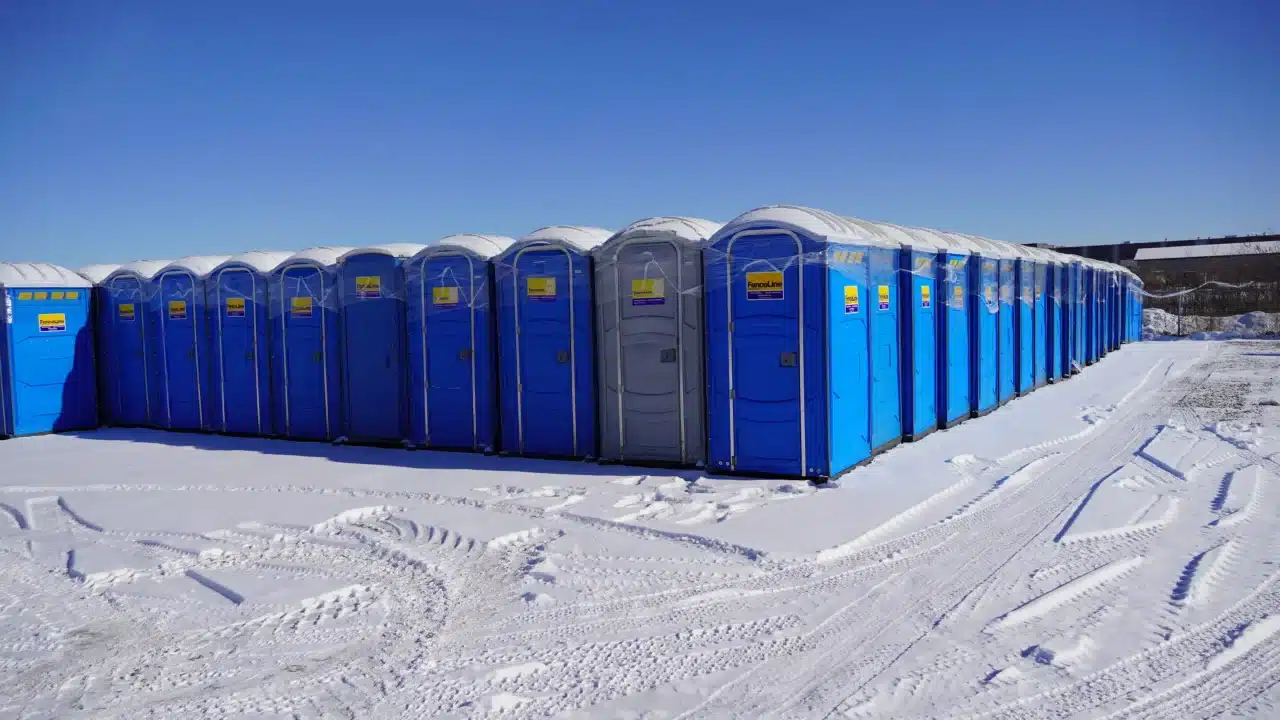
Where to Place a Portable Toilet in Winter
Even in the coldest conditions, you can use the site itself to your advantage.
Find the Sun
Placing your portable toilet in a spot that gets direct sunlight can keep it warmer and more comfortable for anyone who uses it.
Shield from Snow & Wind
Winter winds can be nasty in Alberta, so finding a space that isn’t completely exposed to the wind can make a huge difference in comfort.
- Find Shelter: Something as simple as a bush or a wall can go a long way by blocking the wind.
- Keep the Area Clear: Clear snow and ice from around the unit so the door opens easily, the footing is safe, and our service truck can reach it.
- Rent an Insulated Toilet: Insulated toilets reduce servicing issues and prevent a toilet from freezing, saving time and cost.
- Position the Door Away from Prevailing Winds: This helps to prevent cold drafts from entering the porta potty, ensuring a more comfortable indoor environment.
- Avoid Placing Toilets Where Snow Drifts Accumulate: Keeping toilets away from spots where snow piles up means fewer winter hassles. Drifts can block the door and bury the unit, so you could lose access when your crew needs it most.
Antifreeze, Brine or Chloride Pellets: What Keeps a Porta Potty from Freezing?
Whether it’s summer or winter, your porta potty requires regular cleaning and inspections. When temperatures drop, adding a treatment to the holding tank lowers the freezing point of what’s inside. Here’s how the three common options compare:
| Method | How it works | Lowest working temperature | Cautions |
| Antifreeze | By mixing it with deodorizing water in the tank, you can prevent the liquid from freezing at colder temperatures | Minus 50 °C | Use only RV/marine antifreeze, never automotive antifreeze. Check that your waste hauler or disposal facility accepts it. |
| Salty Brine | Salt lowers the freezing point of the tank contents, the same way road salt melts ice on sidewalks. | Minus-20°C degrees | Salt can cause corrosion to some components; use cautiously. |
| Calcium Chloride Pellets | Pellets added to the tank dissolve and lower the freezing point of the contents. | As low as minus-31°C | Pellets last about a week, so they need to be topped up at each service. |
Insulated vs. Heated Portable Toilets: Which Should You Rent?
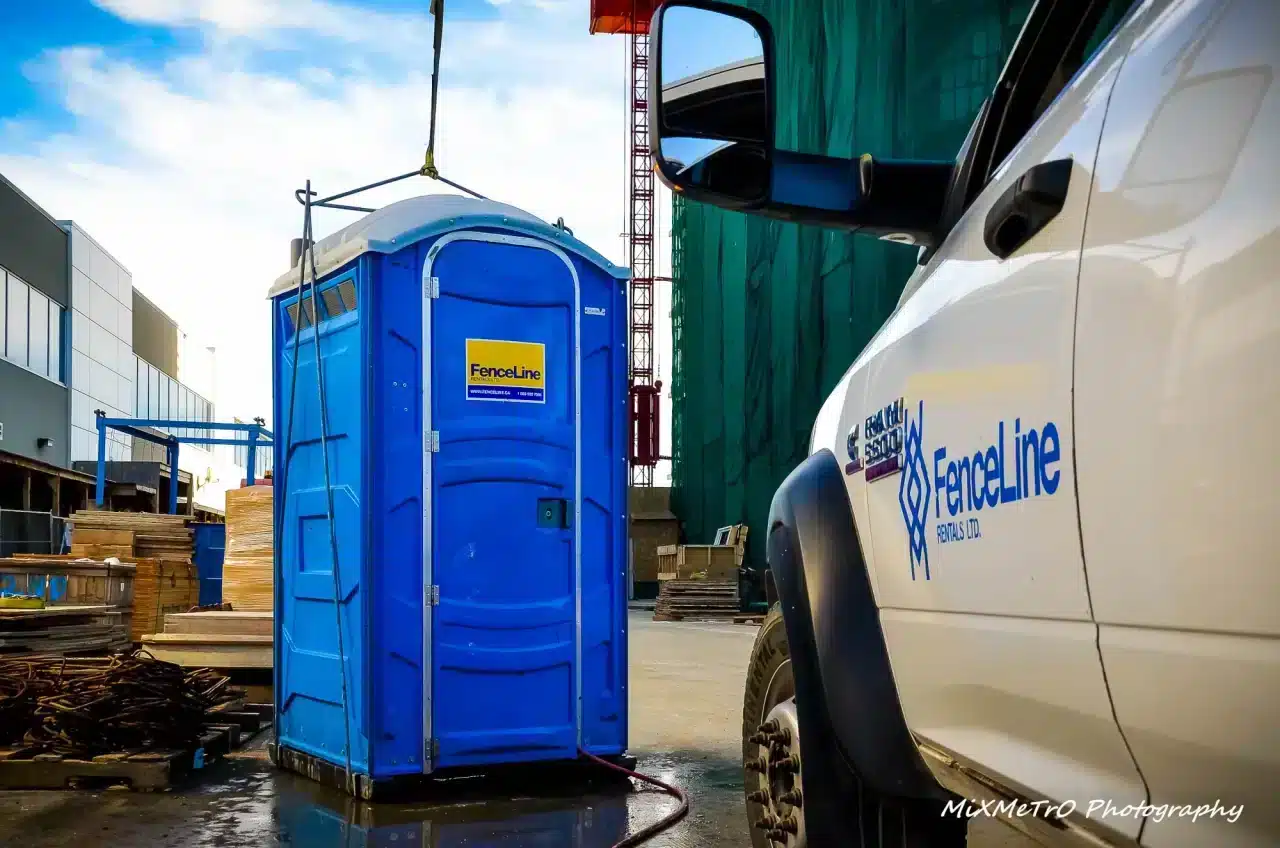
Once you know how to winterize a toilet, you’ll be able to keep workers on your site or guests at your event warm throughout the long, cold winter months.
For long winter jobs, an insulated unit does more than any treatment can. FenceLine offers two options built for Alberta winters:
Insulated (Jacketed) Toilets
We know Alberta winters can be extremely challenging on industrial and commercial construction sites. That’s why our insulated portable toilets are a great solution during the colder months.
An insulated jacket slows heat loss, keeping the unit warmer and less likely to freeze. Add the optional heater for real comfort in the deep cold.
Hardwall/Executive Heated Toilets
Executive Heated Toilets are one option for harsh Alberta winters. These toilets are exceptionally sturdy, with a poly tank and base. The insulated rigid walls are made of 1 1/2” metal-clad panel construction (R12).
The interior has a 1250-watt baseboard heater with thermostat, an interior light with on/off switch, a coat hook, a GFCI-protected 110-volt 12-amp outlet, and a deadbolt lock with vacant/occupied indicator.
| Feature | Insulated (Jacketed) Toilet. | Heated Hardwall Toilet |
| R-Value | Medium | High (R12) |
| Heater | Optional | Built-In |
| Best For | Winter construction and outdoor events in extreme cold temperatures | Long-term projects requiring sturdiness, strength and security |
| Power Required | No | Yes |
Which should you choose? A jacketed toilet suits most winter construction sites and events, especially where power is limited. A heated hardwall unit is worth it for long projects, office or trailer compounds, and sites where crews will use the toilet all day in deep cold.
What Do Winter Portable Toilet Rentals Cost?
The cost of renting porta potties generally runs between $150 and $600 per toilet per month and depends on the type of unit, rental length, and season. Weekly servicing and cleaning are included in the cost, but can rise in the winter because of additional maintenance.
Own Your Toilets? How to Winterize Them Yourself
For companies that have longer-term porta potty needs, buying units instead of regularly renting can save money and ensure that they have toilets available whenever and wherever they need them.
If you own your portable toilets, here’s how to winterize them yourself:
- Inspect each unit for cracks or damage before temperatures drop.
- Place units out of the wind, away from drift zones and where water won’t pool and freeze.
- Add RV/marine antifreeze, salt brine or calcium chloride pellets to the holding tank, and top it up after every pump-out.
- Make sure you have a safe power source if you’re using built-in heaters.
- Schedule regular pump-outs and cleaning all winter.
Request a Winter Toilet Quote from FenceLine
Winterizing portable toilets is critical for comfort, safety and durability, and a few simple steps go a long way.
FenceLine offers portable toilets for rent in Calgary, Edmonton, and across Alberta, perfect for construction sites, outdoor weddings, events, and concerts. Our jacketed and heated portable toilet rentals come with winter treatment and servicing included, so your crew stays comfortable all season.
Request a quote today and keep your site safe and comfortable all winter.
FAQ
How to winterize a portable toilet in Alberta?
Place the unit in a sheltered spot with the door away from the wind, add an antifreeze treatment like RV antifreeze, salt brine or calcium chloride to the holding tank, and keep up regular servicing. For long winter jobs, use a jacketed or heated unit. If you rent from FenceLine, we handle the treatment and servicing for you.
Can you put antifreeze in a porta potty?
Yes. RV or marine antifreeze (never automotive antifreeze) can be added to a porta potty’s holding tank to stop it from freezing. Salt brine and calcium chloride pellets work too. If you rent from FenceLine, we add the treatment at every service.
How often should portable toilets be serviced in winter?
This will depend on how often they are being used, and high-volume portable toilets may require servicing more often, but once a week is generally recommended.
How cold can a portable toilet get before it freezes?
Once temperatures hit zero degrees, there is the possibility of the liquid in portable toilets freezing. That’s why it’s so important to add antifreeze, salty brine or calcium chloride pellets that will prevent freezing until much more extreme temperatures.
Do heated portable toilets need power?
Yes. Heated units contain a space heater that plugs into a standard 110-volt outlet or a generator. Jacketed toilets don’t need power as they do not contain a heater.