
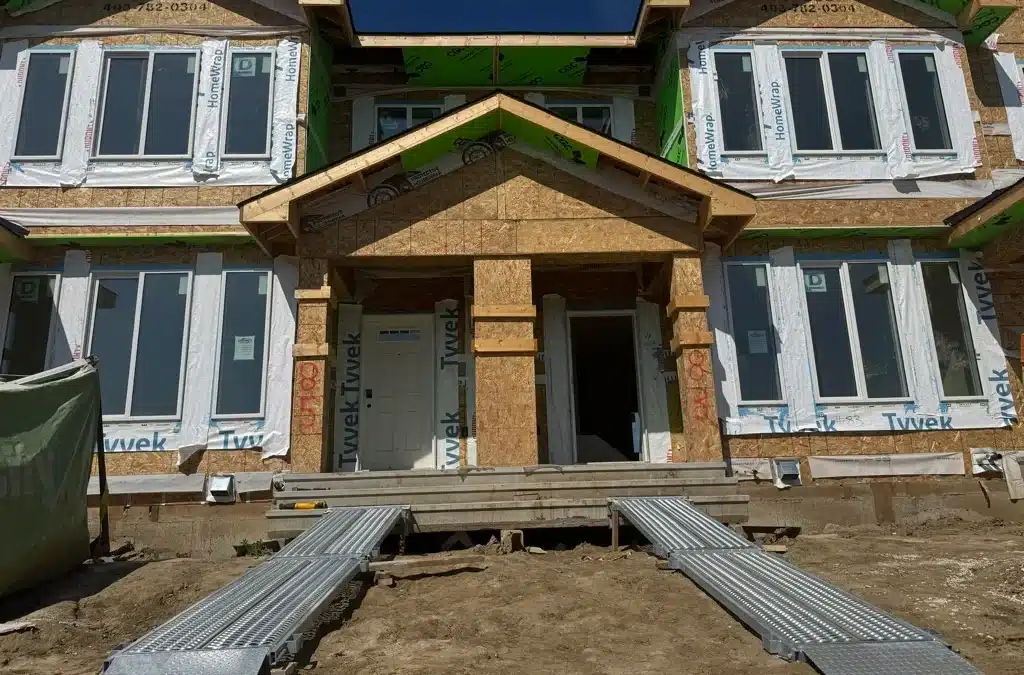
Slips, trips, and falls are among the most common—and most preventable—construction site hazards in Alberta. Between unpredictable weather, uneven terrain, and busy work zones, job sites can become risky quickly.
According to OHS statistics, slips, trips, and falls are one of the top causes of time-loss injuries in Alberta. Using solutions like temporary walkways, proper site organization, and consistent safety practices can significantly reduce hazards and keep crews safe and productive.
Key Takeaways
- Slips, trips, and falls are often caused by uneven ground, mud, ice, clutter, and poor lighting.
- Temporary walkways provide stable, elevated, non-slip access over mud, grass, and wet terrain.
- Preventing slips, trips, and falls requires proactive planning and consistent site maintenance.
- Temporary walkways are often safer and more durable than standard ground protection mats.
- Walkways improve traction, drainage, and worker access across soft ground.
- A complete construction site safety checklist—walkways, fencing, waste management—helps ensure compliance and reduce injuries.
What Are the Hazards of Slips, Trips & Falls?
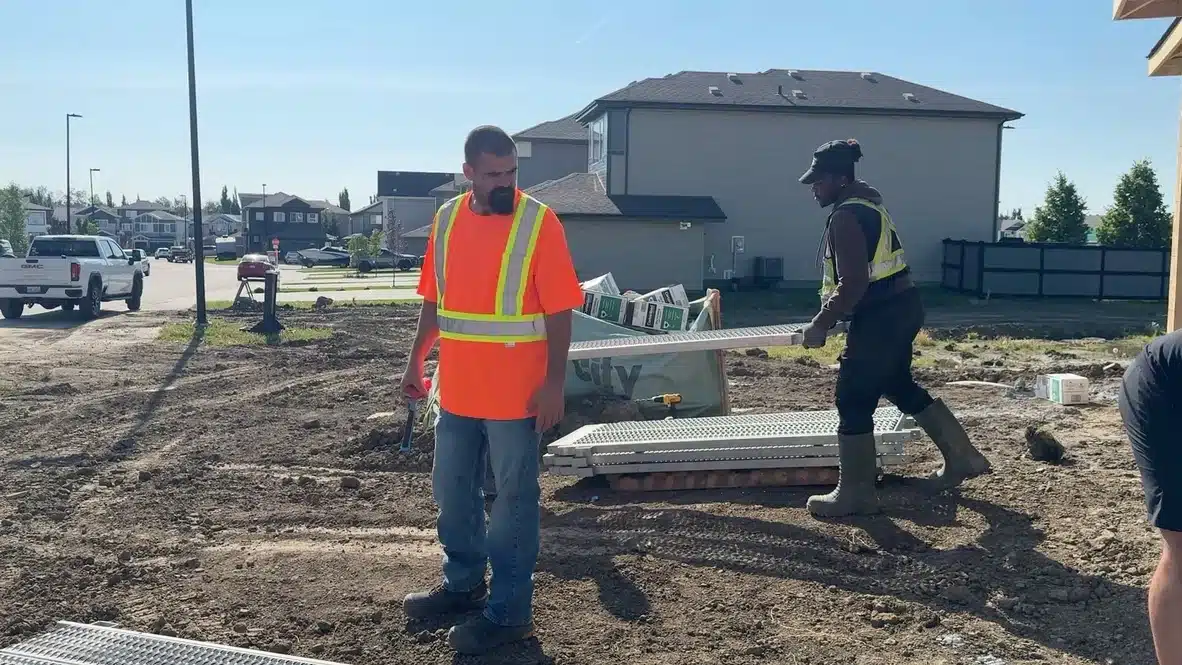
Construction sites in Alberta face unique risks due to our weather, soil conditions, and seasonal freeze-thaw cycles. Understanding the hazards of slips, trips, and falls helps you prevent them before they become a problem.
What Can Cause Slips, Trips & Falls?
Common slip, trip, and fall hazards on Alberta construction sites include:
- Mud, snow, and ice, especially during spring melt and fall freeze.
- Uneven ground, such as ruts, soft soil, and grade changes.
- Wet or slippery surfaces from rain, spilled liquids, or snowmelt.
- Cluttered walkways, tools, cords, and debris.
- Poor lighting, especially during early mornings or winter months.
- Improper access routes, forcing workers to walk on unsafe ground.
- Inadequate site organization, including undefined pedestrian paths.
How to Prevent Slips, Trips & Falls on Construction Sites
Preventing slips, trips, and falls requires a proactive, layered approach. Install walkways early in the project. Do not wait for ground deterioration.
Here are the top strategies for construction sites:
- Install Temporary Walkways: Temporary walkways create stable, elevated access paths over mud, snow, and grass. They keep workers out of soft ground and prevent slipping during wet or cold conditions.
- Maintain Clear Walking Paths: Remove debris, cords, waste, and unused materials daily.
- Improve Drainage: Standing water quickly becomes mud or ice. Proper drainage minimizes slippery surfaces.
- Use Adequate Lighting: Workers need clear visibility to recognize hazards around them.
- Apply Sand or Ice Melt in Winter: Seasonal weather in Alberta requires active ice management. Evaluate pathways daily during freeze-thaw cycles.
- Install Temporary Fencing to Direct Traffic: Designated pedestrian routes help keep workers off hazardous areas.
- Keep Waste Managed: Overflowing waste contributes to blocked paths, tripping hazards, and poor site flow.
Temporary Walkways vs. Ground Protection Mats
Both temporary walkways and ground protection mats help stabilize soft or wet ground—but they serve different purposes.
Ground Protection Mats
Ground protection mats are typically used to prevent equipment from sinking into soft soil or to protect grass from vehicle traffic. They are placed directly on the ground and are suitable for heavy loads.
However, they:
- Can shift under repeated foot traffic.
- Become icy very easily.
- Provide no elevation = no drainage.
- Can become slippery when wet.
- Do not elevate workers above mud or snow.
- May trap moisture, causing the surface underneath to become soft.
Temporary Walkways
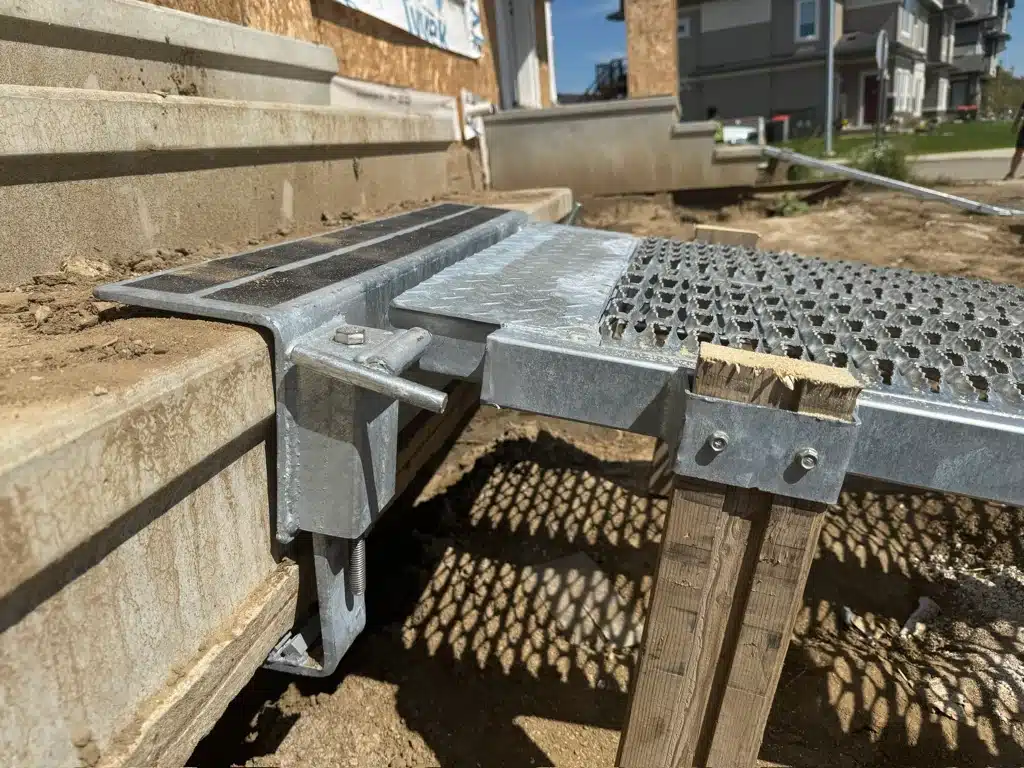
FenceLine’s temporary walkways are purpose-built for worker safety. These metal walkways include legs that elevate the platform, keeping workers above mud, snow, and uneven ground.
Benefits include:
- Elevated traction surface
- Designed for pedestrian access, not equipment
- Safer for repetitive movement
- Slip-resistant surfaces
- Improved drainage beneath the walkway
- Consistent, stable footing over grass, mud, or wet terrain
- Better long-term durability than mats for pedestrian use
For worker access, temporary walkways are the safer and more reliable choice.
Construction Site Safety Checklist
A safe construction site is an organized one. Use this checklist to maintain compliance and reduce the risk of slips, trips, and falls.
- Clear Access & Pedestrian Pathways
- Install temporary walkways for safe movement.
- Designate foot traffic areas using temporary fencing.
- Eliminate trip hazards such as cords, tools, or debris.
- Site Organization & Perimeter Security
- Use temporary fencing to secure the perimeter.
- Keep materials stored properly and away from walkways.
- Ground & Weather Management
- Create drainage routes for water runoff.
- Apply sand or ice melt during winter operations.
- Avoid requiring workers to walk through mud, grass, or wet terrain.
- Waste Management
- Maintain onsite bins and remove waste regularly.
- Prevent clutter accumulation around work zones and pathways.
- Worker Safety Equipment
- Ensure proper PPE: boots with traction, gloves, and reflective gear.
- Provide adequate site lighting.
- Keep first-aid kits and emergency plans accessible.
- Check walkways for ice/traction daily.
- Assign a Safety Lead to monitor access routes.
FenceLine provides temporary walkways, temporary fencing, and waste management services to support safer, more efficient sites across Alberta.
Keep Your Construction Site Safe with FenceLine
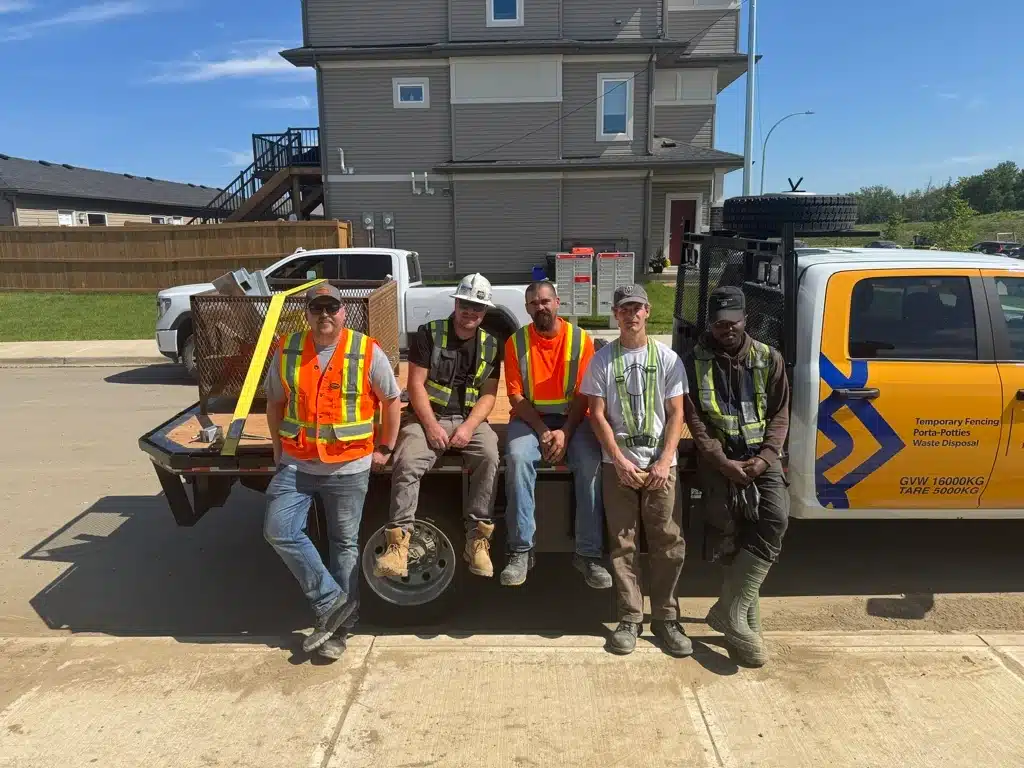
Preventing slips, trips, and falls doesn’t just protect workers—it improves productivity, reduces downtime, and ensures your project stays on schedule. FenceLine’s temporary walkways offer a simple, durable solution for creating dependable access paths across muddy, uneven, or weather-affected construction sites.
FenceLine walkways are engineered for Alberta’s mud, snow, freeze-thaw cycles, and heavy-duty construction environments.
From walkways and temporary fencing to waste management, we help Alberta job sites stay safe, compliant, and organized. Request your quote today and get expert recommendations for your project.
FAQ
Do mats become slippery when wet or icy?
Yes, mats can become slippery when wet or icy, posing a risk for slips and falls, so it’s essential to choose mats with good traction for these conditions.
How do temporary walkways prevent slips, trips, and falls?
Temporary walkways help prevent slips, trips, and falls by providing a stable and even surface that enhances traction and reduces the risk of slipping on uneven ground.
Are temporary walkways safe on ice and snow?
Fenceline’s temporary walkways are designed to provide enhanced safety on ice and snow, offering superior traction that helps minimize the risk of slips and falls, making them a reliable choice for navigating challenging winter conditions.
Do ground protection mats harm grass?
Ground protection mats typically protect grass from heavy equipment, rutting, and soil compaction. However, leaving them in place too long can reduce airflow and sunlight, causing temporary grass stress. Temporary walkways avoid this issue by elevating the platform above the ground.
Do walkways damage grass?
Elevated temporary walkways can protect grass from damage by preventing foot traffic that compacts soil and hinders growth. They enhance drainage and airflow, promoting healthier grass while still providing access.
What are some other construction site hazards?
Beyond slips, trips, and falls, common hazards include electrical risks, struck-by incidents, falling objects, equipment collisions, hazardous materials, and poor weather conditions.
What is the most common injury due to trips, slips, and falls?
Beyond slips, trips, and falls, common hazards include electrical risks, struck-by incidents, falling objects, equipment collisions, hazardous materials, and poor weather conditions.
What is the most common injury due to trips, slips, and falls?
Sprains, strains, broken bones, and back injuries are among the most common. In severe cases, head injuries can also occur.