
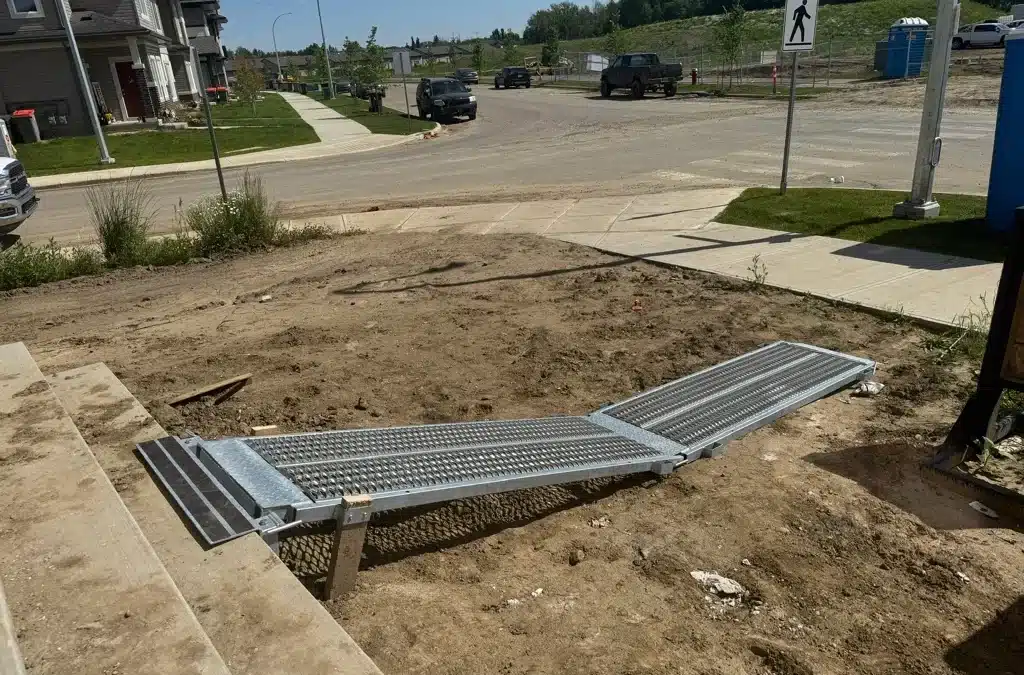
Protecting a lawn during construction is one of those details that’s easy to overlook—until the damage is done. Grass can take months to recover from heavy foot traffic, compacted soil, and equipment movement. The good news is that the right temporary walkway solution can prevent most of that damage entirely.
Here’s how temporary walkway planks compare to other lawn protection methods, and why they’re the clear choice for construction sites across Alberta.
Key Takeaways
- Temporary walkway planks create safe, defined pathways without damaging the grass or compacting soil beneath.
- Unlike mats or plywood, walkway planks rest above the ground—keeping them free of mud, snow, and slip hazards.
- Modular steel planks can be configured for construction sites of any size or layout.
- FenceLine Rentals offers contractor-grade, hot-dipped galvanized steel walkway planks available for rent across Alberta.
Why Lawn Protection Matters on Construction Sites
A well-maintained lawn represents significant time and investment—for homeowners and businesses alike. Even short-term construction traffic can leave lasting damage: compacted soil, dead patches, and muddy ruts that take months to recover.
The problem gets worse when materials, tools, or machinery are moved across the property. Without proper protection in place, you’re not just damaging grass; you’re potentially disrupting the soil structure underneath it.
Protecting the lawn isn’t just about aesthetics. It’s about respecting the property and avoiding costly restoration work once the job is done.
Temporary Walkway Planks vs. Other Lawn Protection Methods

Before choosing a lawn protection method, it helps to assess your site’s specific needs—traffic volume, duration of work, weather conditions, and whether heavy equipment is involved. Here’s how the main options stack up.
Temporary Walkways
Steel walkway planks are the best way to protect grass during construction—and for good reason.
- They rest above the ground, preventing soil compaction and grass damage.
- They create clear, defined pathways for workers, visitors, and equipment operators.
- The modular design means they can be configured to cross any length or layout of lawn.
- The open steel grating surface provides strong traction in all conditions and lets debris, snow, and mud fall through rather than build up.
- They stay clean and slip-resistant even in Alberta’s harshest seasons.
What’s Included When You Rent from FenceLine
Each standard walkway plank rental includes a 2′ x 6′ walkway plank, transition plate, ledger plate, and clamp plate. Optional handrail components are also available for added pedestrian safety and guidance.
All FenceLine walkway planks are built from contractor-grade, hot-dipped galvanized steel — strong, durable, and suited for year-round use on any Alberta job site.
Lawn Protection Mats
Ground protection mats made from polyethylene are a common choice for sites where heavy equipment needs to be stored or moved. They’re easy to install and effective at preventing machinery wheels from tearing up turf.
However, they’re not ideal for pedestrian traffic. Because they lie flush with the ground, they quickly accumulate mud, snow, and water—making them slippery and unsightly. They also track mud and debris indoors on boots, which walkway planks (elevated above the ground) avoid entirely.
- Best for: Heavy equipment movement
- Not ideal for: Pedestrian pathways, wet or snowy conditions
Plywood Planks
Laying plywood planks across the grass is not an ideal solution for protecting your lawn from heavy traffic, especially on construction sites where work might take place over more than one day. Yes, plywood planks will distribute weight for machinery if you absolutely need to transport it and don’t have any other options, but it’s not a good solution for managing pedestrian traffic.
For starters, plywood planks can quickly become slippery when wet. They’re also susceptible to cracking, and they deteriorate with moisture. Just as importantly, they can be ugly to look at, and because they rest flat on the ground, they can still cause damage to grass, making them a less-than-ideal solution for construction lawn protection.
- Best for: Last-resort weight distribution in a pinch
- Not ideal for: Ongoing pedestrian traffic, wet weather, multi-day projects
Gravel Paths
On some long-term construction sites, operators will simply build their own gravel paths and lay fabric to prevent them from mixing with other soil. This doesn’t really protect the grass, though, and it will involve a lengthy period after work is complete for the lawn to return to its original condition.
- Best for: Extended projects where lawn restoration is acceptable
- Not ideal for: Sites where the existing lawn needs to be preserved
Rent Walkway Planks in Alberta

When it comes to protecting your lawn during construction, temporary walkway planks are the clear winner. They’re safe, effective, and keep your site looking professional—without sacrificing the lawn underneath.
FenceLine offers flexible rental options for construction sites of all sizes across Alberta. Whether you need a short run for a residential project or a full configuration for a larger commercial site, our team will help you find the right setup.
Request your personalized quote from FenceLine today.
FAQs About Construction Lawn Protection
Do walkway planks damage grass?
No—that’s one of their biggest advantages. Because the steel planks rest above the ground rather than sitting flush on it, they avoid compacting the soil or crushing the grass beneath. Air and light can still reach the lawn during use.
How do walkway planks perform in winter conditions?
Very well. The open steel grating surface allows snow, ice, and mud to fall through rather than accumulate on top, keeping the walking surface safe and slip-resistant even in Alberta winters. Lawn protection mats and plywood, by contrast, become dangerously slippery when wet or icy.
Can walkway planks be used for both pedestrians and equipment?
Walkway planks are primarily designed for pedestrian traffic. For sites where heavy machinery needs to be moved across grass, ground protection mats are often a better fit—or a combination of both products can be used for different zones of the site.
How long can walkway planks stay in place?
Temporary walkway planks can remain installed throughout a construction project. Because they’re elevated and made from galvanized steel, they won’t deteriorate from prolonged exposure to moisture, making them suitable for both short- and long-term use.
How do you protect trees on a construction site?
In Calgary, a tree protection plan is required for construction sites. Setting up temporary fencing around trees is a critical first step in preventing accidental damage from equipment or foot traffic.
How do you repair grass after construction damage?
If your lawn was damaged during construction, overseeding damaged patches is the most effective way to restore it—though recovery can take several months. The simplest solution is to prevent damage in the first place using walkway planks, which protect both the grass and the soil structure beneath it.